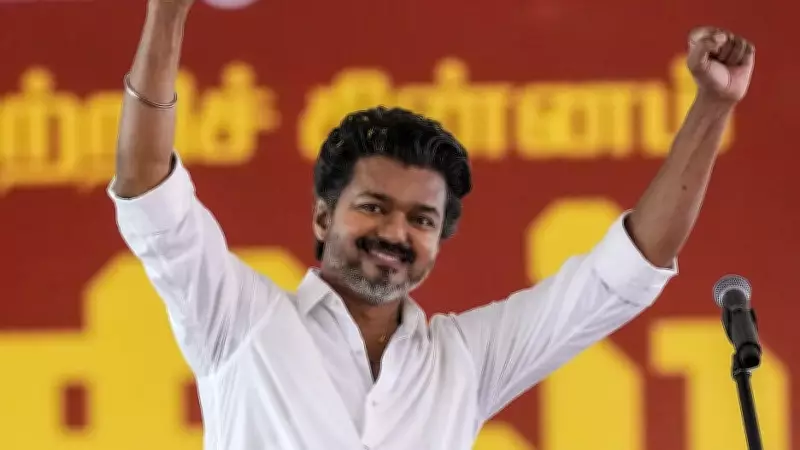
The 2026 Tamil Nadu Assembly elections have witnessed a seismic shift in the state's political landscape, as actor-turned-politician Vijay's Tamilaga Vettri Kazhagam (TVK) surged ahead across all regions, effectively breaking the long-standing duopoly of the Dravidian majors, the DMK and AIADMK.
According to early trends, the TVK wave was so formidable that by 10 am on counting day, only three of the 34 incumbent ministers were leading in their respective constituencies. This starkly underscores the magnitude of the anti-incumbency wave and the public's embrace of Vijay's fledgling party.
Historic Shift in Tamil Nadu Politics
For decades, Tamil Nadu's political arena was dominated by the DMK and AIADMK, with power alternating between the two. The 2026 elections, however, mark a potential end to this bipolar contest. Vijay's TVK, launched just a few years ago, has managed to capture the imagination of voters, particularly the youth and those disillusioned with traditional parties.

Political analysts note that Vijay's campaign focused on transparency, development, and a clean break from the past. His rallies drew massive crowds, and his social media outreach was unprecedented for a Tamil Nadu politician.
Impact on Major Alliances
The DMK, led by M.K. Stalin, and the AIADMK, under Edappadi K. Palaniswami, found themselves on the defensive. The DMK's alliance with the Congress and other smaller parties failed to counter the TVK surge. Similarly, the AIADMK's alliance with the BJP and other allies could not stem the tide.
By 10 am, the trends indicated that TVK was leading in over 150 seats, a clear majority in the 234-member assembly. The DMK was leading in around 50 seats, and the AIADMK in about 30. Smaller parties and independents accounted for the rest.
Vijay's Strategy and Appeal
Vijay's strategy was multi-pronged. He positioned himself as a non-corrupt alternative, promising to eradicate caste-based politics and bring in a new era of governance. His film star status undoubtedly helped, but his political messaging resonated with a wide cross-section of society.
Key factors included his emphasis on education, employment, and infrastructure. He also tapped into the growing frustration with the Dravidian parties' dynastic politics and alleged corruption.
Reactions and Future Implications
Reactions poured in from across the political spectrum. DMK leaders conceded the defeat gracefully, while AIADMK leaders vowed to rebuild. Vijay, in his first address, thanked the people and promised to deliver on his campaign promises.
The 2026 election result is expected to reshape Tamil Nadu's politics for decades. It signals a shift towards a more issue-based, charismatic leadership model, moving away from the traditional Dravidian ideology that dominated for nearly a century.
As the counting progresses, all eyes are on how the TVK will form the government and what policies it will prioritize. The nation watches as Tamil Nadu writes a new chapter in its democratic history.