

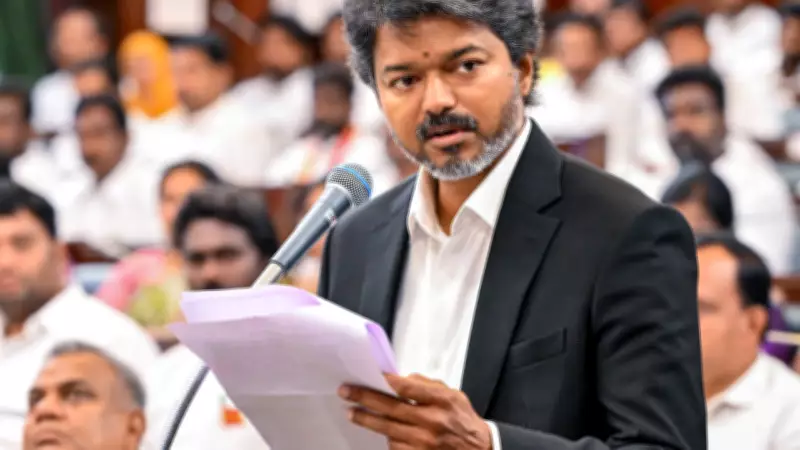
Vijay Moves Quickly to Assert Control
CHENNAI: Just days after navigating intense post-poll uncertainty and winning a crucial trust vote, Tamil Nadu Chief Minister C Joseph Vijay has moved quickly to stamp his authority on his fledgling government. He is framing his administration as a break from the past while signaling an ambitious governance agenda.
Dramatic Political Shift
Vijay's rise to power marked one of the most dramatic political shifts in Tamil Nadu in recent years. What began as a fractured mandate and frantic alliance negotiations culminated in a comfortable 144-22 victory in the assembly floor test. This victory was helped by support from a breakaway section of the AIADMK, while the DMK stayed away from the vote.
The confidence vote ended immediate questions over the survival of the TVK-led government, but it also underlined the unusual political arithmetic sustaining Vijay's administration.

Early Governance Measures
Soon after taking oath, Vijay moved to project decisiveness with a set of early governance measures. These include:
- Up to 200 units of free electricity for households consuming under 500 units
- Formation of the 'Singapen' special task force for women's safety
- Anti-narcotics units across cities and districts
Positioning and Fiscal Strategy
Vijay has sought to position his government as one rooted in social justice, transparency and administrative accountability. Simultaneously, he has sharpened the attack on the previous DMK regime over Tamil Nadu's finances. His plan to release a white paper on the state's fiscal condition suggests the government intends to make the economy a major political battleground.
Political Implications
The AIADMK split that played out during the trust vote has added another layer of intrigue to Tamil Nadu politics. Sections of the opposition effectively enabled Vijay's survival. That support may have helped him clear the first legislative hurdle, but it also raises longer-term questions about alliance stability and opposition realignment.
For now, Vijay has crossed the immediate test. The bigger challenge begins now: converting a dramatic political breakthrough into stable governance in a state unused to coalition-era uncertainty.






