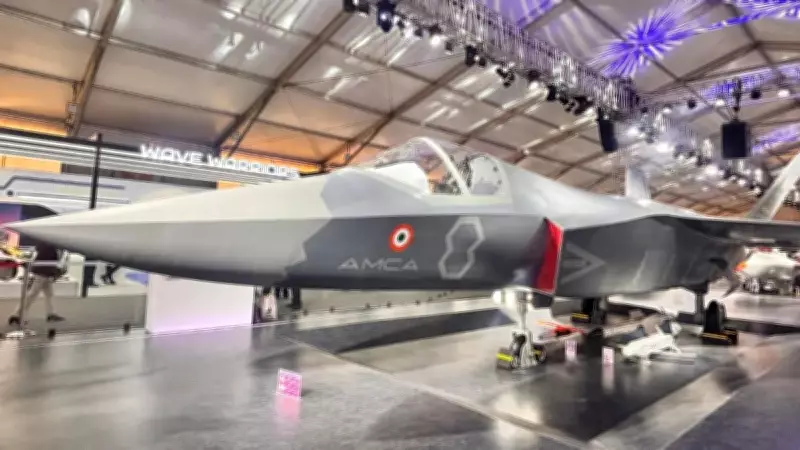
In a significant development for India's indigenous defence manufacturing sector, three major private sector giants have been shortlisted to spearhead the development of the country's ambitious fifth-generation fighter jet programme. The Advanced Medium Combat Aircraft (AMCA) project, a cornerstone of India's self-reliance in defence, has taken a decisive step forward with the selection of key industrial partners.
Private Sector Takes the Lead in AMCA Development
The Defence Ministry has officially shortlisted the Tata Group, Larsen & Toubro (L&T), and Bharat Forge to participate in the crucial development phase of the AMCA. This move underscores a strategic shift towards leveraging the expertise and capabilities of India's leading private corporations in high-technology defence projects. The selection process involved rigorous evaluation of technical prowess, manufacturing infrastructure, and project management capabilities.
Notable Exclusion of HAL from Initial Phase
In a surprising turn of events, Hindustan Aeronautics Limited (HAL), the state-owned aerospace and defence company, has been left out of the initial development consortium for the AMCA programme. This decision marks a departure from traditional defence procurement patterns, where HAL has historically been the primary nodal agency for aircraft manufacturing in India. Industry analysts suggest this could be part of a broader strategy to foster competitive ecosystems and accelerate development timelines.
The AMCA represents India's ambitious foray into the realm of fifth-generation stealth fighter aircraft, designed to compete with global counterparts like the F-35 Lightning II and the Sukhoi Su-57. The aircraft is envisioned to feature advanced capabilities including:
- Stealth technology for reduced radar cross-section
- Supercruise capability without afterburners
- Advanced sensor fusion and avionics
- Network-centric warfare capabilities
- Internal weapons bays for maintaining stealth profile
Strategic Implications for Indian Defence Industry
This development carries profound implications for India's defence industrial base. By involving private sector heavyweights like Tata, L&T, and Bharat Forge, the government aims to create a robust ecosystem for advanced aerospace manufacturing. Each of these companies brings unique strengths to the table:
- Tata Group: With established aerospace divisions through Tata Advanced Systems, the conglomerate has experience in manufacturing aerostructures and collaborating with global defence majors.
- Larsen & Toubro: Known for its engineering excellence and defence contracting experience, L&T has been involved in various strategic defence projects including submarine construction.
- Bharat Forge: As a global leader in metallurgy and forging technology, the company brings critical expertise in manufacturing high-strength, lightweight components essential for advanced aircraft.
Timeline and Project Roadmap
The AMCA programme is progressing according to an ambitious timeline, with the first prototype expected to roll out by 2026. This represents a critical milestone in India's journey toward developing indigenous fifth-generation combat capabilities. The project is being closely monitored at the highest levels of government, given its strategic importance for national security and technological sovereignty.
Defence experts note that successful development of the AMCA would position India among a select group of nations capable of designing and manufacturing advanced stealth fighter aircraft. This achievement would significantly enhance the Indian Air Force's operational capabilities while reducing dependence on foreign military acquisitions.
The collaboration between these private sector giants and government research agencies like the Aeronautical Development Agency (ADA) and Defence Research and Development Organisation (DRDO) is expected to create synergies that accelerate technological development. This public-private partnership model represents a new paradigm in India's defence procurement strategy, potentially serving as a blueprint for future high-technology defence projects.