

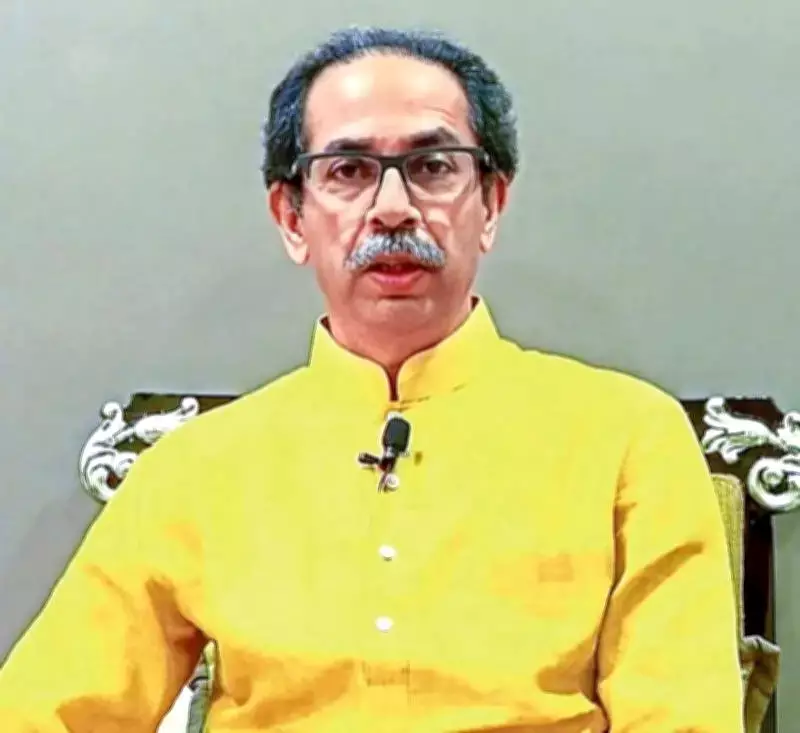
Shiv Sena (UBT) Leader Calls for Swift Action on Women's Quota, Delays in Constituency Redrawing
In a significant political statement on Thursday, Shiv Sena (UBT) chief Uddhav Thackeray emphasized the urgent need for the Central government to implement the 33% women's reservation without delay. However, he strongly advocated for putting the contentious issue of delimitation on hold, arguing that it requires more extensive discussion due to its implications for national unity.
Thackeray's Clear Stance on Legislative Priorities
Thackeray issued a detailed statement clarifying his party's position. "The Women's Reservation Bill was already passed in Parliament in 2023. Accordingly, implement the 33% women's reservation immediately!" he declared. He stressed that while the reservation should be enacted promptly, the process of redrawing electoral constituencies must be temporarily paused.
"This is an important matter for broader national unity," Thackeray explained. "For us, this is not about any one party's political future but about the future of the country. Therefore, more discussion and deliberation on it is necessary!" His remarks highlight a strategic focus on separating the implementation of women's quota from the politically sensitive delimitation exercise.

Sanjay Raut's Sharp Critique of Government Moves
Echoing Thackeray's concerns, Shiv Sena (UBT) MP Sanjay Raut launched a scathing attack on the Centre's proposed approach. Addressing the media ahead of a special Parliament sitting, Raut questioned the rationale behind increasing parliamentary and state assembly seats. "You will increase approximately 800 seats in the Lok Sabha and 400 seats in the Maharashtra Legislative Assembly. What is the need?" he asked pointedly.
Raut alleged that the Bharatiya Janata Party (BJP) is using delimitation to serve its political interests. "If you want to give 33% reservation to women, then give it based on the current number of 543... We accept it. BJP is attempting to redraw constituencies to suit its political interests," he asserted.
Allegations of Political Motives and Renaming Demands
In a provocative move, Raut suggested renaming the legislation to reflect what he sees as its true intent. "If you want to increase the numbers, do delimitation according to your wishes, and play politics according to your wishes, then change the name of ‘Mahila Nari Shakti' (Women's Reservation Bill) and introduce the ‘BJP Shakti Bill'. This is the BJP Shakti Bill," he stated, accusing the government of ulterior motives.
Raut also raised doubts about the bill's passage, noting the government's numerical strength in Parliament. "Without 286 to 264 votes, this bill won't pass in the govt. At this moment, the govt is at 292. At the most, it can reach 300. No one should be under the delusion that this bill will pass easily," he warned, highlighting the potential role of opposition unity in blocking the move.
Historical Context and Opposition's Unified Position
Referencing past legislative battles, Raut drew parallels with the farm laws, where some parties' walkouts aided the government. "This time, those who help the govt will be enemies of the country," he cautioned, signaling a hardened stance against any support for the delimitation-linked reservation bill.
Importantly, Raut reiterated that the opposition, including Shiv Sena (UBT), does not oppose women's reservation itself. "This bill was already approved in 2023; we supported it then as well. Our opposition is to the arbitrary actions of the BJP under the guise of delimitation," he clarified, distinguishing between support for gender quota and resistance to perceived political manipulation.
Broader Implications for Indian Politics
The statements from Thackeray and Raut underscore a critical juncture in Indian politics, where women's empowerment initiatives are becoming entangled with electoral boundary changes. Key points from their positions include:

- Immediate implementation of the 33% women's reservation as passed in 2023.
- A call for extensive deliberation on delimitation to protect national unity.
- Allegations that the BJP is using delimitation for partisan gain.
- Warnings about the bill's parliamentary viability and opposition cohesion.
- Clear support for women's quota separate from constituency reorganization.
As the debate intensifies, these developments highlight the complex interplay between gender representation, electoral reforms, and political strategy in India's democratic landscape.





