

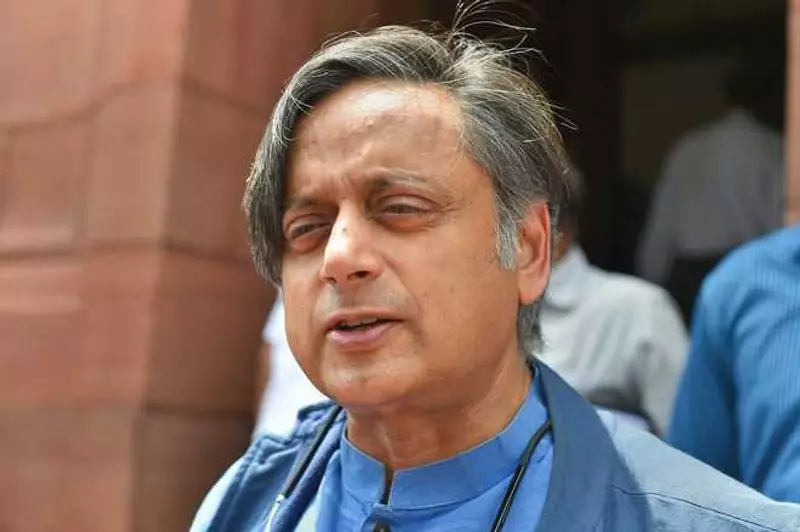
Congress Member of Parliament Shashi Tharoor has firmly declined to comment on recent discussions with Communist Party of India (Marxist) leaders, effectively dismissing speculation about a potential political move. This development comes amid ongoing alliance talks and strategic deliberations in the politically vibrant state of Kerala.
Tharoor's Silence on CPI(M) Discussions
When approached by journalists seeking clarification on the nature and content of his interactions with CPI(M) leaders, Tharoor maintained a composed and non-committal stance. He emphasized that he would not engage in public commentary regarding private political discussions, thereby avoiding any detailed elaboration on the matter. This reticence has fueled further curiosity and analysis within political circles, as observers attempt to decipher the underlying implications of such high-level engagements.
Context of Kerala's Political Landscape
The state of Kerala, known for its dynamic and often contentious political environment, is currently witnessing intense negotiations and alliance-building efforts ahead of crucial electoral contests. The Congress party and the CPI(M), traditionally arch-rivals in the state, have occasionally explored cooperative arrangements in specific contexts, making Tharoor's discussions a subject of significant interest. These talks are viewed against the backdrop of shifting political alignments and the continuous quest for electoral advantage in one of India's most politically aware regions.

Dismissal of Speculative Moves
In his brief interaction with the media, Tharoor not only declined to comment but also explicitly dismissed the notion that his discussions with CPI(M) leaders signify any imminent political move or realignment. He characterized such speculation as premature and unfounded, urging stakeholders and the public to refrain from drawing hasty conclusions. This dismissal aims to quell rumors and maintain focus on the substantive issues at hand, rather than peripheral political maneuvering.
Implications for Congress-CPI(M) Relations
The refusal to comment on these discussions highlights the delicate and often opaque nature of inter-party dialogues in Indian politics. While Tharoor's stance may be interpreted as a strategic move to preserve negotiating leverage, it also underscores the complexities involved in managing coalition dynamics and ideological differences. The Congress and CPI(M) have historically maintained distinct political philosophies, and any potential collaboration requires careful navigation of these divergent paths.
Political analysts suggest that Tharoor's approach reflects a broader trend of cautious diplomacy, where leaders avoid public disclosures that could either jeopardize ongoing talks or alienate core constituencies. As Kerala prepares for future electoral battles, the outcomes of such behind-the-scenes discussions could significantly influence alliance formations and campaign strategies, making Tharoor's role a focal point of political scrutiny.






