Congress MP Shashi Tharoor Applauds Modi Government's Historic Move at Rashtrapati Bhavan
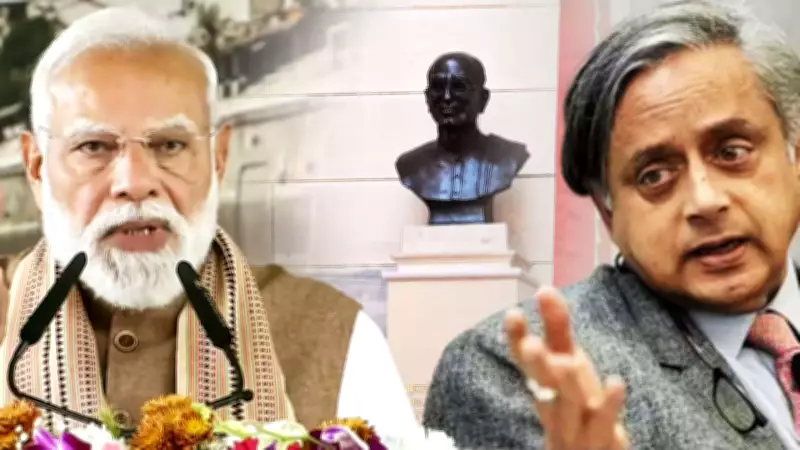
In a notable gesture of cross-party appreciation, Congress Member of Parliament Shashi Tharoor has publicly praised the Narendra Modi-led government for its decision to install a bust of Chakravarti Rajagopalachari at Rashtrapati Bhavan. This significant act involved replacing the statue of British architect Edwin Lutyens, who designed much of New Delhi during the colonial era, with a tribute to India's first and only Indian Governor-General after independence.
A Symbolic Shift Towards 'Mental Decolonisation'
Prime Minister Narendra Modi, who presided over the unveiling ceremony, described the replacement as an essential step in "mental decolonisation." He emphasized the importance of honoring Indian leaders who played pivotal roles in shaping the nation's destiny, rather than retaining symbols of colonial rule. The event, marked by the rendition of Vande Mataram, was attended by senior ministers including BJP President JP Nadda, External Affairs Minister S. Jaishankar, and members of Rajagopalachari's family, underscoring its national significance.
Tharoor's Admiration for Rajaji's Enduring Values
Shashi Tharoor expressed his admiration for Rajagopalachari, commonly known as Rajaji, in a post on the social media platform X. He highlighted Rajaji's commitment to liberal economics, which advocated for free markets and individual enterprise, as well as his unwavering dedication to social justice. Tharoor also noted Rajaji's deep faith in Indian civilization and his respect for constitutional freedoms, values that continue to resonate in contemporary Indian politics.

This public endorsement from a prominent opposition figure adds a layer of bipartisan support to the government's initiative, highlighting Rajagopalachari's legacy as a unifying figure in Indian history.
The Historical Context and Broader Implications
The replacement of Lutyens' statue with Rajaji's bust is not merely an architectural change but a profound statement on India's post-colonial identity. Edwin Lutyens, whose designs are iconic in New Delhi, represented the British imperial presence, whereas Rajagopalachari symbolizes India's transition to self-governance and democratic values. As the last Governor-General of India, Rajaji served from 1948 to 1950, overseeing the country's early years of independence and contributing to its constitutional development.
This move aligns with the Modi government's broader efforts to reclaim and celebrate India's indigenous heritage, often through such symbolic acts. By honoring Rajagopalachari in this manner, the government aims to inspire a renewed appreciation for leaders who championed India's sovereignty and progressive ideals.