

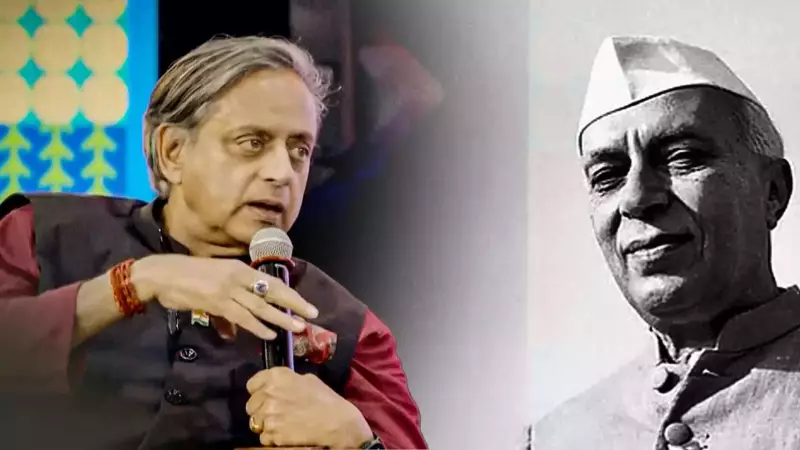
In a significant political intervention, senior Congress leader and MP Shashi Tharoor has presented a balanced yet sharp analysis of India's first Prime Minister, Jawaharlal Nehru's legacy. Speaking at an event in Kerala on January 9, 2026, Tharoor offered a rare blend of admiration and criticism, defending Nehru's foundational role while openly admitting to historical errors.
A Nuanced Defence: Fan, But Not an Uncritical One
Tharoor began by clearly stating his position as an admirer of Nehru, but not an uncritical one. He emphatically praised Nehru for his unparalleled contribution in laying the foundations of Indian democracy, secularism, and the modern institutional framework of the nation. Tharoor argued that these pillars, established under Nehru's leadership, continue to define the core of India's democratic ethos.
However, in a move that distinguishes his commentary from blind hagiography, Tharoor did not shy away from acknowledging flaws. He specifically pointed to decisions linked to the 1962 war with China as mistakes made during Nehru's tenure. This candid admission of error, set against the backdrop of his overall praise, framed a narrative of historical honesty.

Accusing the BJP of "Selective Memory" and Scapegoating
The crux of Tharoor's political critique was directed squarely at the ruling Bharatiya Janata Party (BJP). He accused the BJP-led government under Prime Minister Narendra Modi of engaging in a politics of selective memory and unfairly blaming Nehru for a wide array of contemporary issues, regardless of their actual connection to his era.
"Nehru has become a convenient scapegoat for the Modi government," Tharoor asserted. He argued that this trend of pinning blame on the first Prime Minister for every current problem is a political tactic that oversimplifies complex historical processes and avoids accountability for present-day governance.
Beyond Politics: Literature and the Larger Message
While the political commentary formed the heart of his address, Tharoor's speech also touched upon broader cultural themes. He spoke about the importance of a reading culture, the craft of writing, and shared glimpses of his own literary journey. These reflections, however, served to underscore the intellectual tradition he associates with Nehruvian thought.
The event, therefore, became more than just a historical analysis. It was a defence of a pluralistic and intellectually engaged political culture. In one speech, Tharoor managed to model a approach to history that neither whitewashes the past nor allows it to be weaponised for narrow contemporary gains. His remarks have ignited a fresh debate on how India's founding figures are remembered and the political uses of history in the nation's ongoing ideological battles.






