

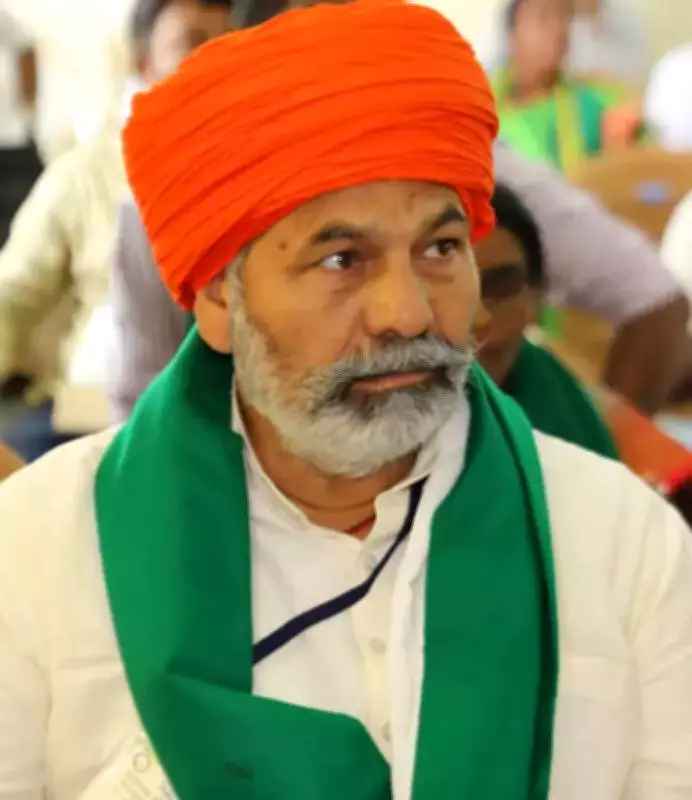
Rakesh Tikait Accuses BJP of Using Development for Political Polarization
Farmer leader Rakesh Tikait on Saturday entered the political fray surrounding proposed development plans for Sambhal, drawing direct comparisons with the high-profile focus seen in Ayodhya, Kashi, and Mathura. Speaking in Prayagraj, Tikait offered a sharp critique of what he described as politically motivated development initiatives.
Development Welcome But Political Intent Questioned
Tikait stated that while development in itself was welcome and necessary, the political intent behind such moves was "clearly visible" and concerning. He specifically targeted the ruling Bharatiya Janata Party, alleging that a deliberate "Hindu-Muslim trial" was currently underway in Sambhal as part of electoral strategy.
"Similar efforts can be seen in other places ahead of the 2027 assembly elections," Tikait claimed, suggesting this was part of a broader political pattern rather than isolated incidents.

Mathura Could Be Next Political Battleground
According to Tikait's analysis, Mathura could emerge as the next focal point after Sambhal in what he described as a calculated political strategy. He argued that religious polarization tends to surface prominently in regions where elections are approaching, creating what he called "convenient political narratives."
Tikait referenced recent violence during a Ram Navami procession in West Bengal's Murshidabad district, claiming that similar "experiments" were being conducted there as well. He suggested these incidents often coincide with political timelines and are strategically timed to influence public discourse.
Bharatiya Kisan Union's Political Stance Clarified
Responding to questions about the political position of the Bharatiya Kisan Union, Tikait offered important clarifications:
- He would exercise his right to vote as an individual citizen
- Workers of the union were completely free to support any political party of their choice
- The organization does not impose political preferences on its members
- The union maintains political neutrality as an institution
Growing Voter Awareness and Muslim Community Progress
Tikait expressed skepticism about whether these political strategies would succeed electorally, noting that people were becoming increasingly aware of political manoeuvring. He observed growing sophistication among voters who can recognize when development projects are being used for political purposes rather than genuine public welfare.
Significantly, Tikait highlighted what he described as positive developments within the Muslim community, claiming they were becoming "more conscious and progressive" with growing participation in education and competitive examinations. This observation suggested a changing social landscape that might complicate traditional political calculations based on religious polarization.
Electoral Implications and Future Outlook
The farmer leader's comments come at a crucial political juncture, with multiple states preparing for elections and national political strategies being formulated for the 2027 assembly polls. Tikait's warnings about religious polarization returning to electoral discourse reflect broader concerns about the nature of political campaigning in India.
While acknowledging that development projects can bring tangible benefits to communities, Tikait emphasized the importance of examining the underlying motivations and timing of such initiatives. His comments suggest that the intersection of development politics, religious identity, and electoral strategy will remain a contentious issue in Indian politics for the foreseeable future.






