

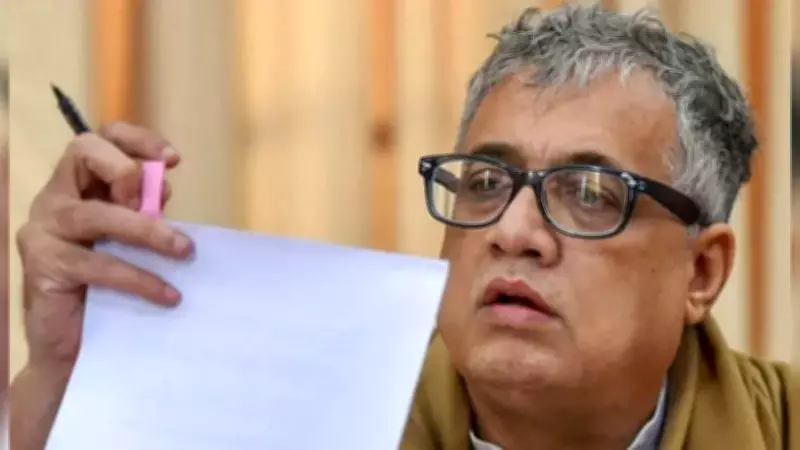
TMC Launches Detailed Counter to PM Modi's Bengal Address Ahead of 2026 Polls
In a significant political development, West Bengal's ruling Trinamool Congress (TMC) has issued a comprehensive seven-point reality check directly challenging Prime Minister Narendra Modi's recent election speech in the state. This strategic move comes as political parties begin positioning themselves for the crucial West Bengal Assembly elections scheduled for 2026, marking an early escalation in campaign rhetoric and policy debates.
Context of the Political Exchange
The confrontation stems from Prime Minister Modi's address during a recent political rally in West Bengal, where he reportedly made several claims regarding the central government's contributions to the state's development and criticized the TMC-led state administration. In response, the TMC has meticulously compiled a point-by-point rebuttal that scrutinizes these assertions, aiming to present what they describe as a more accurate picture of ground realities in Bengal.
Key Points of the TMC's Seven-Point Reality Check
The TMC's detailed response addresses multiple domains of governance and development. While specific points may vary, the party's counter-narrative typically focuses on areas where they believe the central government's claims diverge from actual implementation or outcomes in West Bengal.

- Central Fund Allocation and Utilization: The TMC challenges claims about central funding, arguing that West Bengal has not received its fair share of resources or that funds have been delayed or diverted, impacting state-led development projects.
- Infrastructure Development: The party disputes assertions about central infrastructure projects in Bengal, questioning their completion status, local employment generation, and overall benefit to the state's economy.
- Agricultural Support: TMC's rebuttal likely addresses PM Modi's remarks on farmer welfare, contrasting central schemes with state initiatives and highlighting issues like minimum support price (MSP) implementation and rural distress.
- Social Welfare Schemes: The reality check examines central social welfare programs, comparing their reach and effectiveness in Bengal against state-run schemes, particularly in areas like healthcare, education, and women's empowerment.
- Industrial and Economic Growth: The TMC counters claims about industrial investment and job creation, pointing to state data on employment, industrial disputes, and the impact of central policies on Bengal's economic landscape.
- Law and Order Situation: In response to any criticisms about governance, the TMC defends the state's law and order record, presenting statistics on crime rates, police reforms, and public safety initiatives.
- Political Autonomy and Federalism: The final point often addresses broader concerns about center-state relations, accusing the central government of overreach and undermining Bengal's constitutional rights and administrative autonomy.
Strategic Implications for the 2026 Elections
This seven-point reality check represents more than just a political rebuttal; it is a calculated strategic move by the TMC to set the narrative for the upcoming 2026 assembly elections. By proactively challenging the Prime Minister's statements, the TMC aims to reinforce its position as Bengal's primary political force, capable of defending state interests against perceived central encroachment.
The timing of this response is particularly significant, as it allows the TMC to frame the election discourse around development accountability and federal rights, potentially mobilizing its support base while appealing to undecided voters concerned about Bengal's future trajectory.

Broader Political Landscape in West Bengal
West Bengal remains a fiercely contested political battleground, with the TMC, Bharatiya Janata Party (BJP), and Left Front all vying for dominance. The 2021 assembly elections saw the TMC secure a decisive victory, but the BJP emerged as the principal opposition, making the state a critical focus for national politics. This early exchange between the TMC and PM Modi suggests that the 2026 polls will be characterized by intense ideological and policy debates, with both sides preparing for a prolonged campaign.
As the political temperature rises, analysts predict that such reality checks and counter-narratives will become more frequent, shaping voter perceptions and influencing electoral outcomes in one of India's most politically vibrant states.





