The Trinamool Congress (TMC) is confronting one of its most significant crises as a faction claims the support of 58 out of its 80 MLAs. In this critical situation, the role of the West Bengal assembly speaker will be decisive in recognizing one camp as the 'original party,' similar to the case of the Shiv Sena in Maharashtra.
Constitutional Provisions on Defection
The Constitution's Tenth Schedule prohibits the 'constitutional sin' of defection. Following the deletion of Paragraph 3 from the schedule in 2003, the defense of a 'split' is no longer available to members facing disqualification proceedings. Consequently, when a split occurs within a political or legislature party, neither faction can validly claim to be the 'original party' if each files a petition for disqualification of the other's members.
Supreme Court's Observations in Shiv Sena Case
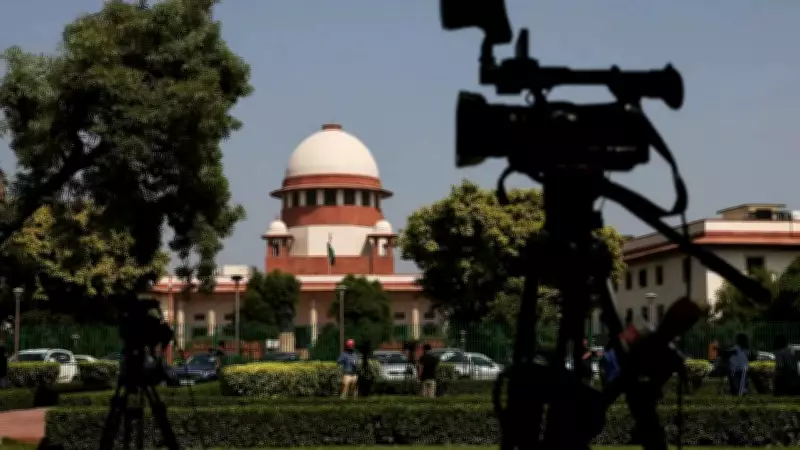
While hearing the Shiv Sena plea, the Supreme Court stated that regardless of the defense available to members facing disqualification, the speaker may be required to determine who the 'real' political party is when adjudicating disqualification petitions under Paragraph 2(1)(a), especially when two or more factions have emerged. The court emphasized that with the deletion of Paragraph 3, both factions cannot be considered to constitute the original political party. To determine which members have voluntarily given up party membership, it is essential to first ascertain which faction represents the political party.

Criteria for Determining the Original Party
The Supreme Court outlined that the speaker must consider the party's constitution and any rules and regulations specifying its leadership structure. If rival groups submit multiple versions of the party constitution, the speaker should rely on the version submitted to the Election Commission before the factions emerged, as this version had the consent of both sides. This approach prevents both factions from amending the constitution to serve their own interests.
Furthermore, the court clarified that the speaker should not base the decision solely on which group holds the majority in the assembly. 'This is not a game of numbers, but of something more. The structure of leadership outside the legislative assembly is a relevant consideration for determining this issue,' the court said.