

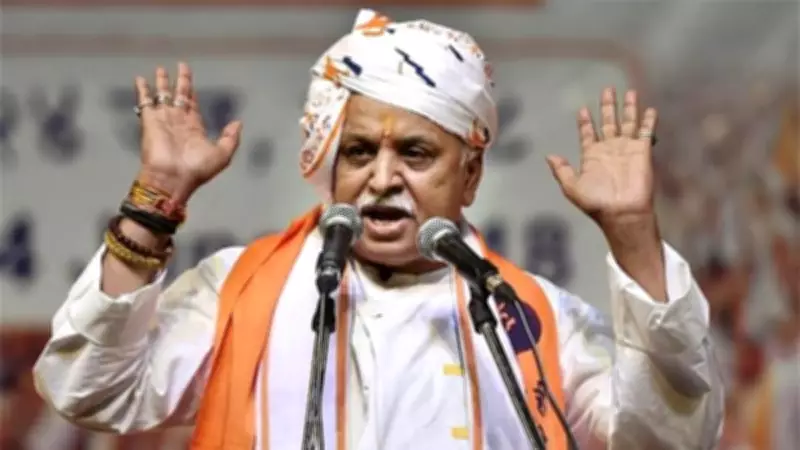
Togadia Calls for DNA Testing to Identify Illegal Bangladeshi Nationals in Assam
In a significant development in Guwahati, Antarrashtriya Hindu Parishad (AHP) president Praveen Togadia has made a strong appeal for the implementation of DNA testing to identify illegal Bangladeshi nationals residing in Assam. Speaking at a press conference on Tuesday, Togadia emphasized the use of the 1951 voters' list as the foundational basis for this proposed verification process.
Demand for DNA Verification of 'Miyas'
During his address, Togadia specifically targeted the community referred to as 'Miyas', a term often used pejoratively for Bangladesh-origin migrant Muslims in Assam. He stated, "We demand that DNA tests be conducted to determine citizenship eligibility for 'Miyas'. The 1951 voters' list is available. Let the ancestry be traced on its basis." This call aims to establish a clear and scientific method to ascertain the legitimacy of claims to Indian citizenship.
Feasibility and Government Responsibility
Togadia elaborated on the practicality of his proposal, noting that DNA tests typically require only two to three hours to complete. He highlighted the availability of necessary equipment, including portable machines, suggesting there is no shortage of resources to carry out such an initiative. "This method will be feasible for the govt, if they wish to do so. If govt cannot detect infiltrators, then it would be their failure," he asserted, placing the onus squarely on the government to act decisively.

He further argued that any government, regardless of its political affiliation, possesses the capability to detect illegal immigrants if it demonstrates the necessary determination. This statement underscores his belief in the technical and administrative viability of the proposed DNA testing framework.
Consistent Advocacy for 1951 as Cut-off Year
Aligning with his long-standing position, Togadia reiterated the demand for 1951 to be established as the uniform cut-off year for the National Register of Citizens (NRC) across India. He criticized the existence of different cut-off years in various regions, advocating for a standardized approach to ensure consistency and fairness in citizenship determinations.
In his concluding remarks, Togadia made a direct appeal to the authorities: "We demand that govt detect Bangladeshi infiltrators, who have illegally entered and lived in Assam after 1951, and deport them." This call to action reflects his firm stance on addressing what he perceives as a critical issue of illegal immigration affecting Assam and the broader national security landscape.






