Trump Questions Circumstances of Armed Protester's Fatal Shooting by Border Patrol in Minneapolis
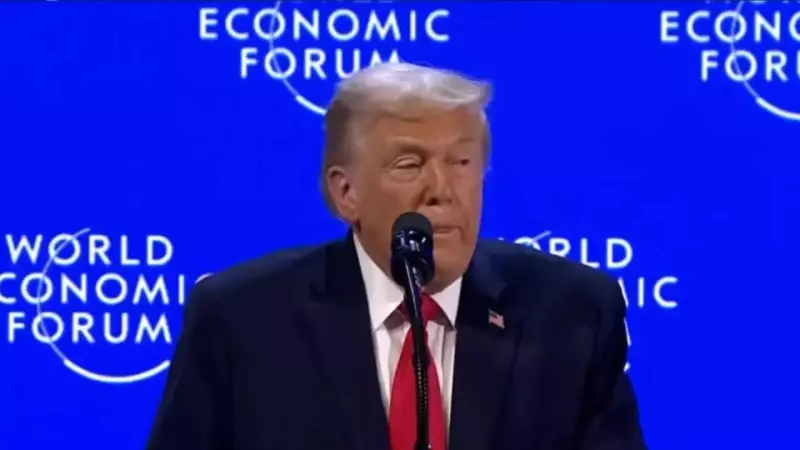
Former President Donald Trump has publicly questioned why 37-year-old Alex Pretti was carrying a firearm when he was shot and killed by a Border Patrol agent during an incident in Minneapolis. Speaking to reporters on Tuesday, Trump expressed skepticism about Pretti being an "assassin" but emphasized his concern over the presence of the weapon.
Trump's Remarks Highlight Tension Between Gun Rights and Public Safety
"You can’t have guns. You can’t walk in with guns. You can’t do that. It’s just a very unfortunate thing," Trump stated, reiterating similar sentiments at an event in Iowa the same day. He described the shooting as "very unfortunate" but added, "I don't like that he had a gun." These comments come despite Trump's administration historically advocating for a broad interpretation of the Second Amendment, which protects the right to bear arms.
The fatal shooting occurred on January 24, just weeks after another incident in Minneapolis where an Immigration and Customs Enforcement officer shot and killed 37-year-old Renee Nicole Good, adding to local tensions over law enforcement actions.

Contradictory Evidence and Legal Context Surround the Case
According to the Department of Homeland Security, Pretti was carrying a 9 mm semi-automatic handgun at the time. However, videos of the shooting did not show him wielding the gun immediately before he was shot. Instead, he was recorded holding his phone to document law enforcement activity—a right protected under the First Amendment. A witness statement filed in federal court also indicated that Pretti did not brandish the weapon in front of officers.
Minnesota law permits individuals with permits to carry firearms in public, without requiring concealment. Minneapolis Police Chief Brian O'Hara noted that Pretti was "exercising his First Amendment rights to record law enforcement activity and also exercising his Second Amendment rights to lawfully be armed in a public space in the city."
Diverging Narratives and Political Reactions
Some officials from Trump's administration defended the Border Patrol agent, labeling Pretti as a "domestic terrorist" with intent to harm law enforcement. In response, Pretti's family released a statement denouncing these claims as "reprehensible and disgusting" lies.
In a January 25 interview with The Wall Street Journal, Trump clarified, "I don't like any shooting," but expressed discomfort with individuals bringing loaded firearms to protests. "But I don’t like it when somebody goes into a protest and he’s got a very powerful, fully loaded gun with two magazines loaded up with bullets also. That doesn’t play good either," he remarked.
Broader Implications: Can the Second Amendment Be Repealed?
The incident has reignited discussions about the feasibility of amending the Second Amendment. Yes, the constitutional amendment can be repealed, but the process is exceptionally challenging. Any proposed amendment requires a two-thirds majority in both the House and Senate, followed by ratification from three-fourths of the states (38 out of 50).
Ron Elving, a senior editor and correspondent for NPR News, highlighted the difficulties in a recent analysis. He noted that the "arduous process has winnowed out all but a handful of the amendments proposed over the past 230 years." Even popular ideas often stall, and repealing gun ownership rights would face significant opposition in a nation where many citizens passionately defend their right to bear arms.
Elving pointed to "tremendous support" for gun ownership in regions like the South, West, and Midwest, which collectively have enough states to block such an amendment. An alternative method involves calling a Constitutional Convention, requiring two-thirds of state legislatures to propose amendments, which then need ratification by three-fourths of the states.
This case underscores the ongoing national debate balancing individual liberties with public safety, particularly in contexts involving protests and law enforcement interactions.