

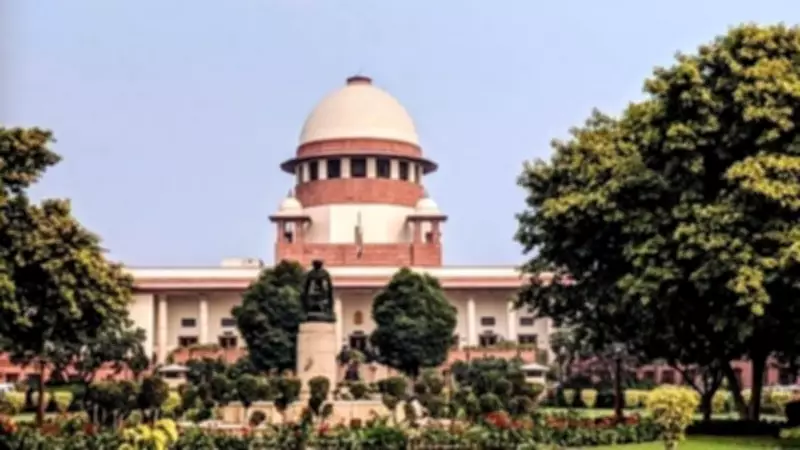
Unions Express Deep Distress Over Supreme Court Dismissal of Domestic Workers Wage Petition
In a significant development that has sparked widespread concern among labor rights advocates, the Supreme Court of India has dismissed a petition that sought the establishment of minimum wages for domestic workers across the country. This decision has been met with strong criticism from various trade unions, who have labeled the outcome as deeply disturbing and a major setback for the rights of millions of workers in the informal sector.
Background of the Petition and Legal Proceedings
The petition, which was filed by labor organizations and activists, aimed to address the long-standing issue of wage disparity and exploitation faced by domestic workers. These individuals, who are predominantly women from marginalized communities, often work in private households without any formal employment contracts or legal protections. The petitioners argued that implementing minimum wages would provide a crucial safety net, ensuring fair compensation and improving their socio-economic conditions.
However, the Supreme Court, after reviewing the case, decided to dismiss the petition. The court cited jurisdictional and procedural grounds, stating that wage fixation typically falls under the purview of state governments and specialized labor tribunals. This ruling has effectively halted the immediate push for a nationwide minimum wage framework for domestic workers, leaving the matter to be addressed through existing state-level mechanisms.

Reactions from Trade Unions and Labor Advocates
The dismissal has elicited a wave of disappointment and outrage from trade unions across India. Representatives from major unions, including the Centre of Indian Trade Unions (CITU) and the All India Trade Union Congress (AITUC), have publicly condemned the decision. They argue that the court's stance overlooks the urgent need for centralized intervention to protect vulnerable workers who often fall through the cracks of state-level regulations.
In statements released to the media, union leaders emphasized that domestic workers are essential to the economy, yet they remain among the most exploited and underpaid labor groups. They pointed out that without a uniform minimum wage standard, workers are left at the mercy of employers, leading to widespread instances of underpayment and abuse. The unions have called for renewed efforts to lobby state governments and push for legislative changes that explicitly include domestic workers under minimum wage laws.
Implications for Domestic Workers and the Informal Sector
This ruling has far-reaching implications for the estimated 4.75 million domestic workers in India, many of whom struggle with poverty and lack of social security. The absence of a national minimum wage means that their earnings can vary drastically based on location, employer discretion, and negotiation power, often resulting in wages that are insufficient to meet basic living expenses.
Labor experts warn that this decision could perpetuate the cycle of exploitation in the informal sector, where workers have limited recourse to legal remedies. They highlight that domestic work, which includes tasks such as cleaning, cooking, and caregiving, is physically demanding and emotionally taxing, yet it is frequently undervalued in monetary terms. The dismissal of the petition underscores the challenges in extending labor protections to informal workers, who constitute a significant portion of India's workforce.
Future Steps and Advocacy Efforts
Despite the setback, trade unions and advocacy groups are not backing down. They plan to intensify their campaigns at both the state and national levels, urging policymakers to enact specific laws that guarantee minimum wages and other benefits for domestic workers. Some states, like Kerala and Tamil Nadu, have already implemented minimum wage standards for this sector, and activists hope to use these examples to build momentum for broader reforms.

Additionally, there is a growing call for public awareness initiatives to highlight the contributions of domestic workers and the need for fair treatment. Unions are also exploring alternative legal avenues, such as filing petitions in high courts or pushing for amendments to existing labor codes. The goal is to ensure that domestic workers are recognized as formal employees entitled to the same protections as other workers, including minimum wages, paid leave, and social security.
In conclusion, the Supreme Court's dismissal of the petition has ignited a fierce debate on labor rights in India, with unions vowing to continue their fight for justice. As the nation grapples with issues of inequality and workers' welfare, this case serves as a stark reminder of the ongoing struggles faced by those in the informal economy.





