

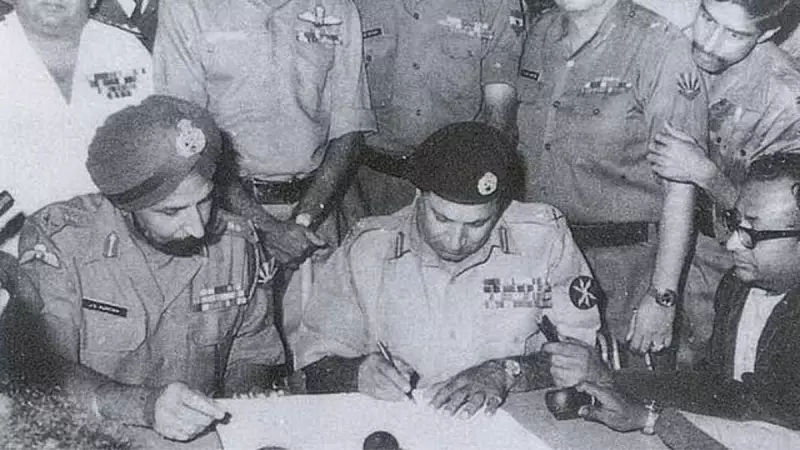
As India commemorates another anniversary of its historic victory in the 1971 war, the spotlight often shines on the well-known commanders and political leaders. However, the triumph was forged by the extraordinary courage and strategic brilliance of numerous individuals whose stories remain in the shadows. Beyond the celebrated names, a group of six unsung heroes played instrumental, and often decisive, roles in securing India's momentous win and the creation of Bangladesh.
The Architects of Victory on Land and Sea
The Eastern Front's success was heavily reliant on bold, unconventional leadership. Lieutenant General Sagat Singh, then a Major General commanding the 8 Mountain Division, embodied this spirit. Disregarding overly cautious orders, he audaciously pushed his forces across the Meghna River using a makeshift fleet of country boats and a daring heli-lift. This unexpected maneuver completely unhinged Pakistani defenses in the east, leading to the rapid fall of Dhaka.
On the maritime front, Commander (Later Vice Admiral) M.P. Awati of the Indian Navy displayed exceptional valor. Commanding the INS Kuthar, a small and aging frigate, he took on a much larger and modern Pakistani destroyer, the PNS Khaibar, during the critical Operation Trident. His aggressive tactics and skillful engagement were crucial in establishing Indian naval dominance in the Arabian Sea from the war's very first night.

Masters of the Skies and Covert Ops
The air campaign required pioneers who could operate under extreme pressure. Group Captain Chandan Singh of the Indian Air Force was a visionary in aerial logistics. He masterminded and executed the airlift of an entire army brigade to the Tangail region near Dhaka. This unprecedented operation, involving large transport aircraft and paradropping, delivered a devastating psychological and tactical blow to the encircled Pakistani forces.
Meanwhile, the success of the Mukti Bahini, the Bangladeshi liberation force, was inextricably linked to an Indian Army officer, Major (Later Lieutenant General) A.K. Chaudhary. As a key trainer and coordinator, he was the vital link between the Indian military establishment and the guerrilla fighters. His efforts in organizing, arming, and directing Mukti Bahini operations behind enemy lines were a constant thorn for the Pakistani army, gathering invaluable intelligence and sapping their morale.
The Bravery Beyond the Battlefield
The war's heroes were not confined to the armed forces. Flight Lieutenant (Later Air Marshal) Mahendra Kumar 'Jumbo' Majumdar performed a feat of incredible flying skill and courage. After his Hunter aircraft was severely damaged by enemy fire, he managed a miraculous wheels-up belly landing in hostile territory. He then evaded capture for days, traversing through enemy lines with the help of locals, to finally return to his base—a testament to sheer determination.
Perhaps one of the most poignant stories is that of a civilian, Harpal Singh, a bus driver from Punjab. When the war broke out, he volunteered his vehicle and services to the army. Driving ammunition and supplies under relentless enemy shelling and aerial bombardment on the crucial Jammu-Poonch sector, his unwavering bravery ensured that Indian troops on the front lines never ran short of critical supplies.
The 1971 war concluded on December 16 with the surrender of over 93,000 Pakistani troops in Dhaka, the largest such capitulation since World War II. While the strategic decisions at the top were vital, the actualization of that victory on the ground, at sea, and in the air depended entirely on individuals like these six. Their stories of initiative, raw courage, and sacrifice in the face of overwhelming odds are an integral part of the 1971 legacy. Remembering them provides a fuller, richer understanding of how India achieved one of its most definitive military and diplomatic successes.






