

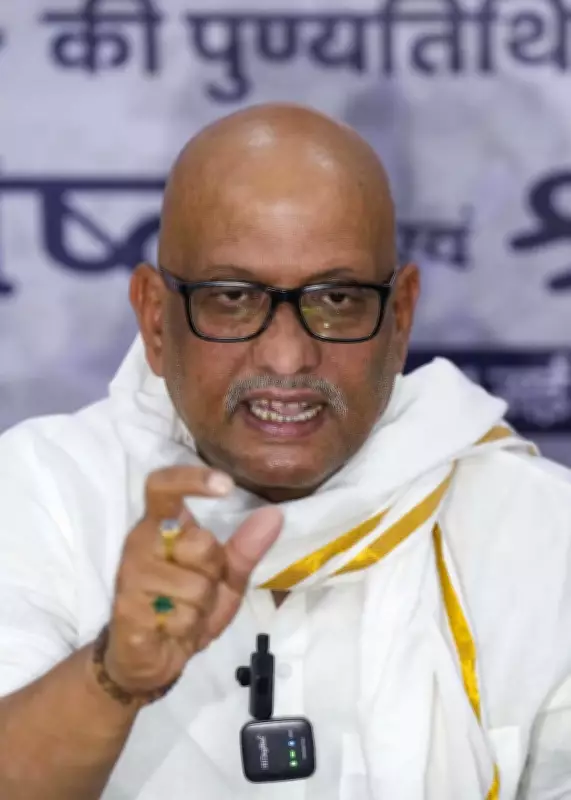
Lucknow: Uttar Pradesh Congress chief Ajay Rai on Thursday launched a scathing attack on Prime Minister Narendra Modi and the Bharatiya Janata Party, accusing the central government of driving the country into economic turmoil and neglecting critical issues concerning youth, farmers, and unemployment.
Allegations of Economic Mismanagement
Rai told reporters that the BJP government had failed on multiple fronts, including managing the economy, handling paper leak incidents, and protecting public assets. He further alleged that the BJP and the Rashtriya Swayamsevak Sangh were betraying the nation by prioritizing their own interests over public welfare.
Despite the BJP being in power for a decade, Rai claimed that the country was facing a severe economic crisis. He criticized the Prime Minister's public messaging on expenditure and consumption, stating that citizens were being asked to cut spending while fuel prices and inflation continued to burden the common man.

Paper Leak Controversies and Exam Irregularities
The Congress leader also targeted the Centre over alleged paper leak cases, asserting that several recruitment and entrance examinations had been compromised during the BJP's tenure. Referring to the NEET controversy, he said that lakhs of students had been adversely affected by repeated examination irregularities, undermining the credibility of the education system.
Privatisation and Favouritism
Rai further accused the government of privatising national assets and showing undue favour to select industrialists. He expressed concerns about higher education institutions, alleging that universities were being politically influenced and educational standards were being deliberately weakened to serve partisan agendas.
Electoral Contest and Political Pressure
Recalling his electoral contest against Prime Minister Modi in Varanasi during the 2014 Lok Sabha elections, Rai alleged that attempts were made to pressure him politically at the time. He reiterated his commitment to standing up against the ruling party's policies and practices.
About the Author
Shailvee Sharda is a journalist with the Times of India since August 2004, covering health, culture, and politics. Having covered the length and breadth of Uttar Pradesh, she brings stories that define elements like human survival and struggle, faiths, perceptions, and thought processes that govern decision-making in everyday life, during big events such as elections, tangible and non-tangible cultural legacy, and the cost and economics of well-being. She keenly follows stories that celebrate hope and life in general.






