UPSC Key Analysis: Major Current Affairs for January 19, 2026
Several significant developments are making headlines today. These topics hold crucial importance for UPSC Civil Services Examination aspirants. Understanding their context and implications can provide valuable insights for both Preliminary and Main examinations.
Trump's Board of Peace: India Receives Historic Invitation
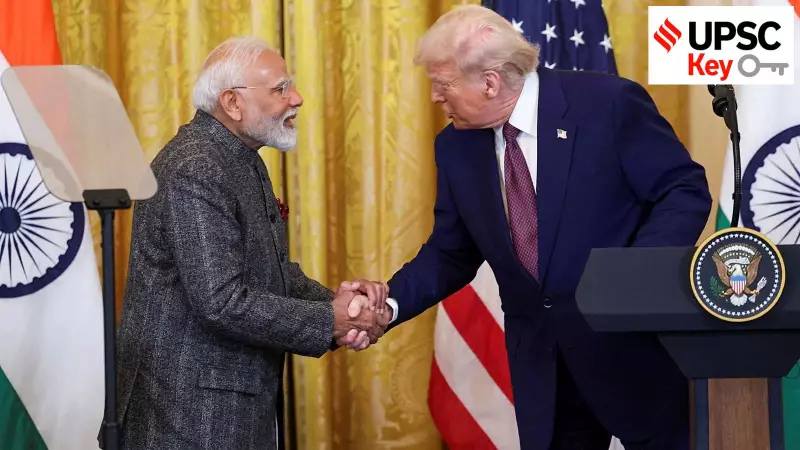
United States President Donald Trump has extended a formal invitation to Prime Minister Narendra Modi. The invitation asks India to join the newly proposed Board of Peace for Gaza. This initiative forms part of Trump's comprehensive 20-point Gaza peace plan.
The White House describes the Board of Peace as an essential mechanism. It will provide strategic oversight for Gaza's transition from conflict to peace and development. The board aims to mobilize international resources and ensure accountability during this critical period.

President Trump outlined his vision in a letter dated January 16, 2026. He wrote about creating a bold new approach to resolve global conflicts. The United Nations Security Council has already endorsed this plan through Resolution 2803, adopted in November 2025.
Geopolitical Implications: This development raises important questions about global governance structures. Some analysts view the Board of Peace as potentially challenging existing multilateral institutions. The initiative could signal a shift away from traditional United Nations mechanisms for conflict resolution.
For India, participation presents both opportunities and challenges. Peace in West Asia directly impacts several Indian interests. The region hosts approximately 90 lakh Indian diaspora members. It supplies about 80 percent of India's oil requirements. Stability would also benefit the proposed India-Middle East-Europe Economic Corridor.
Other countries receiving invitations include Pakistan, Jordan, Greece, Cyprus, Canada, Turkey, Egypt, Paraguay, Argentina, and Albania. The Board of Peace represents an experiment in alternative global governance models.
India Achieves Record Rice Production
Union Agriculture Minister Shivraj Singh Chouhan announced a significant agricultural milestone. India has surpassed China to become the world's largest rice producer in 2024-25. The country produced approximately 150 million metric tonnes of rice during this period.
This achievement marks a remarkable turnaround from a decade ago. In 2014-15, India's rice production stood at 104.4 million metric tonnes. China produced 148.5 million metric tonnes during the same period. India's steady growth contrasts with China's production stagnation in recent years.
Production Challenges: Despite this record output, concerns persist about rice cultivation patterns. Paddy remains India's most widely grown crop, covering 614 districts across approximately 514 lakh hectares. This extensive cultivation creates significant water management challenges.
Rice cultivation requires substantial water resources. Experts estimate that producing one kilogram of rice consumes between 1,000 to 3,000 liters of water. This intensive water use has contributed to groundwater depletion in several agricultural regions.
The government recognizes the need for crop diversification. Agricultural authorities are considering incentive programs for farmers who shift from paddy to alternative crops. These measures aim to address water conservation concerns while maintaining food security.
Research institutions have developed innovative solutions. The Indian Council of Agricultural Research created the world's first genome-edited rice varieties. These new strains offer improved drought tolerance and higher yields with better nitrogen-use efficiency.
Mumbai Mayor Selection: Understanding the Process
The recent Brihanmumbai Municipal Corporation elections concluded successfully. However, Mumbai will not immediately get a new mayor. The selection process follows specific legal procedures that begin only after the new House formally constitutes itself.

Reservation System: Unlike ward elections decided directly by voters, the mayor's position involves indirect election by corporators. The post rotates among reserved categories including Scheduled Castes, Scheduled Tribes, Other Backward Classes, and women. This reservation system operates through a lottery mechanism.
The Urban Development Department conducts a public draw of lots to determine the reservation category for each term. Only after this lottery can political parties nominate candidates belonging to the appropriate category. The mayor requires support from more than 114 corporators in the 227-member House.
Constitutional Framework: This reservation system originates from the 74th Constitutional Amendment. This amendment granted constitutional status to urban local bodies across India. It mandated reservation for marginalized communities in municipal leadership positions.
The mayor serves as the ceremonial head of the municipal corporation. Primary responsibilities include presiding over general body meetings, maintaining order during debates, and using casting votes during ties. The mayor also represents the city at official functions as its first citizen.
However, executive powers remain with the Municipal Commissioner. This officer, typically an Indian Administrative Service appointee, controls civic departments and financial management. The division between ceremonial and executive functions defines urban local governance in India.
Additional Key Developments
India-UAE Relations: United Arab Emirates President Sheikh Mohamed bin Zayed visited New Delhi for bilateral discussions. This visit aims to strengthen strategic partnerships between the two nations. India and the UAE maintain robust economic ties, with bilateral trade exceeding $100 billion in FY2024-25.
Agricultural Subsidy Reform: Policy experts continue advocating for rationalization of food and fertilizer subsidies. Current subsidy structures heavily favor water-intensive crops like rice, sugarcane, and wheat. Reform proposals suggest gradual reduction of coverage and introduction of direct cash transfers to farmers.
Patent Rights and Public Health: Intellectual property regulations balance innovation incentives with public health needs. Indian patent law includes provisions to prevent evergreening practices in pharmaceuticals. The government retains powers to issue compulsory licenses for essential medicines under specific circumstances.
EU Trade Relations: Indian negotiators seek easier access to European Union steel scrap under ongoing trade discussions. This approach addresses concerns about the Carbon Border Adjustment Mechanism affecting Indian metal exports. The government promotes green steel initiatives using electric arc furnace technology.
These developments collectively represent important areas for UPSC examination preparation. Aspirants should analyze their multidimensional implications across political, economic, social, and environmental domains. Understanding interconnections between these topics enhances comprehensive preparation for civil services examinations.