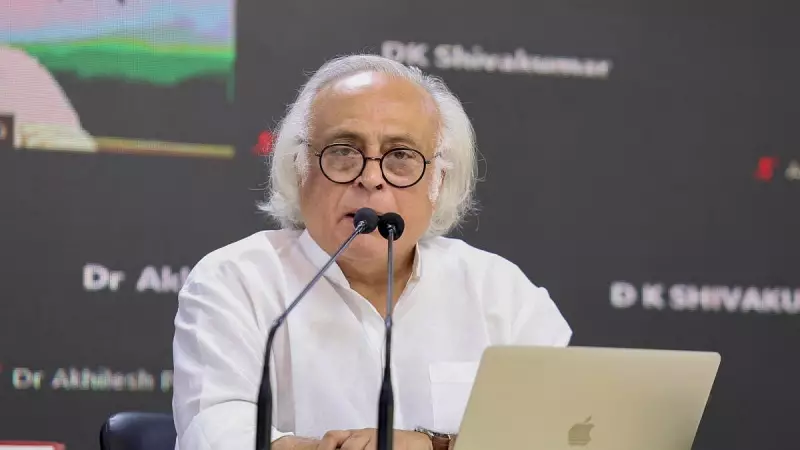
Senior Congress leader Jairam Ramesh has ignited a political controversy by alleging a connection between a clause in the newly passed United States defence legislation and recent parliamentary proceedings in India. The claims centre on a reference to India's civil nuclear liability rules within the massive US National Defence Authorization Act (NDAA) for Fiscal Year 2026.
The Core Allegation: A Link Between US Law and Indian Parliament
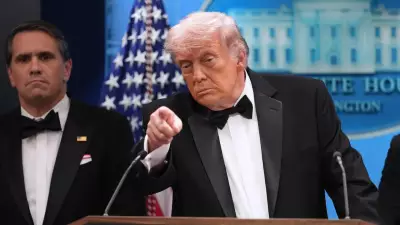
In a series of posts on social media platform X, the Member of Parliament pointed to specific provisions in the American law. The Act, which President Donald Trump signed into law, spans over 3100 pages. Ramesh highlighted that on page 1912, the legislation contains a reference to a joint assessment between the United States and India concerning Nuclear Liability Rules.
Connecting this to domestic politics, Ramesh alleged that the SHANTI legislation was "bulldozed" through the Indian Parliament. He used acronyms to suggest the move benefited not only the TRUMP (The Reactor Use Management Programme) but also, controversially, ADANI (Accelerated Damaging Adhiniyam for Nuclear India). His posts, dated December 20 and 21, 2025, imply the US legislative reference reveals the underlying motivation for the Indian government's urgency in passing the related bill.

Decoding the US Legislation and Its Implications
The inclusion of the US-India nuclear liability assessment in the NDAA 2026 is a significant diplomatic and strategic detail. The National Defence Authorization Act is a critical annual US law that sets the budget and expenditures for the Department of Defence. The mention of a joint assessment on nuclear liability rules indicates that this issue is a active and important component of the broader US-India strategic partnership, particularly in defence and energy cooperation.
Civil nuclear liability has been a long-standing point of discussion between the two countries since the landmark 2008 civil nuclear agreement. US companies have expressed concerns over India's liability law, which holds suppliers accountable in the event of a nuclear accident. A joint assessment suggests ongoing high-level efforts to align frameworks and potentially address these concerns to facilitate greater collaboration.
Political Fallout and Domestic Context
Jairam Ramesh's comments have thrust this technical diplomatic matter into the centre of a heated political debate. By linking the US law's clause to the passing of the SHANTI bill in Parliament, the Congress leader is accusing the government of pushing through legislation to satisfy an international commitment or pressure, specifically pointing fingers at the interests of the US and the Adani Group.
The use of the term "bulldozed" suggests a lack of adequate parliamentary debate or scrutiny, a common charge levelled by opposition parties. This framing aims to question the transparency and intent behind the domestic legislative process, portraying it as being influenced by external and corporate interests rather than national welfare.
The government is yet to issue an official response to these specific allegations. The development sets the stage for a potential confrontation in Parliament when it reconvenes, with the opposition likely to demand clarifications on the connection between the two legislative actions in different countries.
This incident underscores how international agreements and legislative moves in partner countries can quickly become fodder for domestic political battles. It also highlights the continued sensitivity surrounding India's nuclear energy policy and the complex interplay between strategic partnerships, corporate interests, and parliamentary sovereignty.