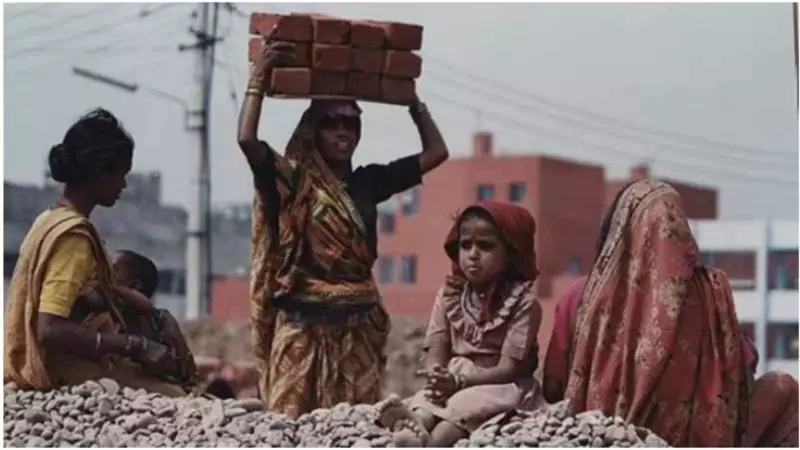
The political landscape in India witnessed a significant upheaval on Thursday, December 19, 2025, as the Lok Sabha passed the contentious Viksit Bharat Guarantee for Rozgar and Ajeevika Mission (Gramin) Bill, commonly referred to as the VB-G RAM G Bill. This legislation, which replaces the United Progressive Alliance's flagship Mahatma Gandhi National Rural Employment Guarantee Act (MGNREGA), has ignited a fierce political battle between the ruling Bharatiya Janata Party and the Opposition Congress, with both sides gearing up for a prolonged confrontation.
Political Arsenal: BJP's Triumph vs. Congress' Protest Strategy
For the BJP, the passage of the Bill marks a strategic political victory. Senior party leaders, including Union Agriculture Minister Shivraj Singh Chouhan, have framed it as a decisive move that strikes at the very root of the UPA's legacy. They argue that the new Bill presents a more effective and corruption-free framework for rural job guarantees, moving beyond what they term an outdated scheme. Chouhan, in his parliamentary speech, directly targeted the Congress and the Gandhi family, accusing them of merely using Mahatma Gandhi's name for political gain.
Conversely, the Congress perceives in this development a potent political opportunity, especially with crucial Assembly elections on the horizon in four states. Party members believe the issue of replacing MGNREGA could resonate more deeply with rural voters than previous campaigns like 'vote chori'. The Opposition protested vehemently inside the House, with Congress MPs trooping into the well, tearing copies of the Bill, and creating chaotic scenes. They accused the government of diluting the rural job guarantee scheme and erasing Mahatma Gandhi's name from a pivotal social welfare program.

Inside the Parliamentary Drama and Strategic Moves
The parliamentary proceedings on December 19 were marked by high drama. The Opposition's aggressive protest led to the adjournment of a scheduled discussion on air pollution in Delhi-NCR. Congress whip Manickam Tagore blamed the government for listing the Bill in a manner that overshadowed other critical debates. Some Opposition leaders privately admitted they did not want the focus on MGNREGA to be diluted by shifting attention to air pollution, an issue they felt was more regional in nature.
Outside Parliament, Congress leader Priyanka Gandhi Vadra launched a sharp critique, warning that the new scheme would be gradually finished off as state governments, particularly those most in need, lack the necessary funds. The party has announced massive nationwide protests and has convened a meeting of its highest decision-making body, the Congress Working Committee (CWC) on December 27, to chalk out an extensive agitation plan.
Long-Term Implications and the Battle of Narratives
The political ramifications of this legislative change are profound. For the BJP, successfully repealing MGNREGA without major backlash is a crucial step in dismantling a scheme that earned the Congress significant political capital, notably contributing to its 2009 electoral success. A BJP MP stated the party's intent was to improvise upon a scheme with immense public goodwill and imprint it with the BJP's own stamp.
The Congress, however, is betting on this issue to galvanize its rural base. A senior Opposition leader called the Bill a sharp weapon against the BJP, directly linking it to the lives of villagers and women. The party aims to leverage this sentiment in the upcoming state polls, framing the debate as a fight to protect the right to work for rural India. As both sides dig in, the VB-G RAM G Bill has set the stage for a defining political contest that will shape policy and electoral battles in the months to come.