

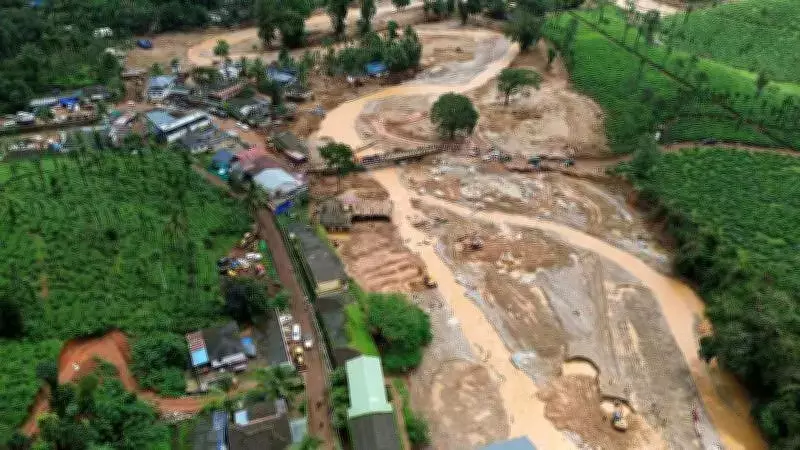
Wayanad Landslide Rehabilitation: State's Direct Spending Falls Short at Rs 102.59 Crore
Nearly two years after the devastating Mundakkai-Chooralmala landslides wreaked havoc in parts of Wayanad, records obtained under the Right to Information (RTI) Act have exposed a stark reality. The Kerala state government has directly allocated only Rs 102.59 crore from its own financial resources for relief and rehabilitation efforts in the affected region.
Limited State Funding Amid Massive Rebuilding Needs
According to official responses from the disaster management department, the entire sum of Rs 102.59 crore was drawn exclusively from the state disaster response fund (SDRF). This figure stands in sharp contrast to estimates that suggest rebuilding Wayanad would require several thousand crores of rupees. Critics have swiftly pointed out that the state's direct financial commitment appears disproportionately low when measured against the immense scale of the disaster and the extensive damage it caused.
Unclear Utilization of Central Assistance and Donations
The state government has consistently asserted that it has fully utilized the Rs 529.50 crore interest-free loan sanctioned by the Central government specifically for Wayanad's rehabilitation. However, a clear and publicly accessible breakdown of how this substantial amount has been spent remains conspicuously absent. Officials have failed to provide a detailed account that clarifies whether these funds were directed towards critical areas such as infrastructure rebuilding, housing construction, or other essential components of the rehabilitation process.

Further documents from the revenue department reveal that generous donors from across the globe contributed a total of Rs 773.98 crore to the chief minister's distress relief fund (CMDRF). Out of this, Rs 167.12 crore has been allocated to the Wayanad district collector. A significant portion of this allocation has been earmarked for land acquisition to develop a rehabilitation township. Specifically, Rs 43.56 crore was set aside for acquiring 64.4 hectares in Elstone Estate, located in Vythiri taluk, Kalpetta, intended for constructing a township for survivors of the Chooralmala landslides. This includes Rs 26.56 crore dedicated to land acquisition and Rs 17 crore under the rehabilitation project component.
Additionally, Rs 39.8 crore has been expended as a mobilisation advance for the ambitious Wayanad Township project. Despite these financial allocations, meaningful progress in terms of creating liveable conditions has been painfully slow. Basic infrastructure essentials such as reliable power and water connections are still not in place, leaving many houses uninhabitable. Apart from a symbolic handover of keys for a small number of houses, strategically timed ahead of elections, the township project remains largely incomplete and non-functional.
Ongoing Suffering and Political Deflections
In effect, despite the substantial influx of public donations and central assistance, many individuals and families affected by the disaster continue to languish without stable living conditions. A senior IAS officer, speaking on condition of anonymity, highlighted a concerning trend in the government's response. "Whenever questions are raised about the delays and lack of progress, the response is often deflected into political comparisons, including what the opposition did or did not deliver in the past. That line of argument completely misses the core issue. Ensuring the welfare and rehabilitation of citizens affected by a disaster is a mandatory and non-negotiable responsibility of the government, not the opposition," the officer stated.
The situation underscores a critical gap between allocated funds and tangible outcomes, raising urgent questions about accountability, transparency, and the prioritization of disaster-affected communities in Kerala's policy implementation.






