

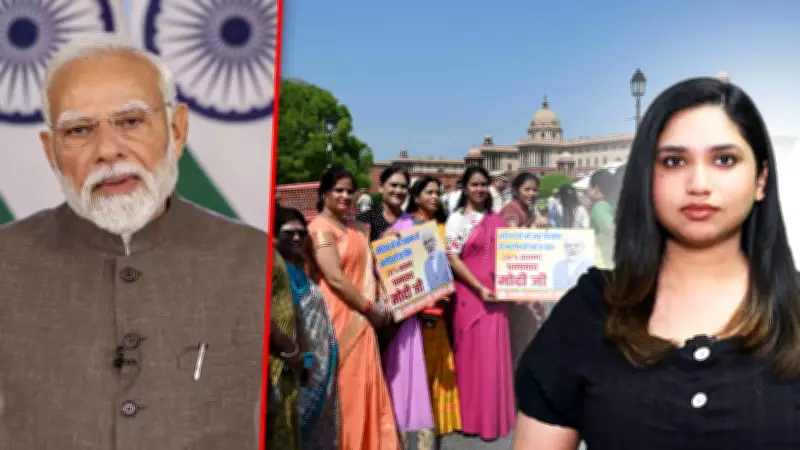
Government Clarifies Women's Quota Bill Implementation Plan
The Central government has provided crucial clarification regarding the implementation of the landmark Women's Reservation Bill, confirming that the legislation will not result in any reduction of parliamentary seats for individual states. Instead, the government has outlined a comprehensive plan to expand the total strength of the Lok Sabha to approximately 850 seats through proportional expansion across all states and union territories.
Opposition Raises Delimitation Concerns
Despite the government's assurances, opposition parties have expressed significant reservations about the proposed expansion plan, particularly focusing on the delimitation process that would accompany such a substantial increase in parliamentary representation. Political leaders from various opposition factions have warned that the delimitation exercise could fundamentally alter the existing balance of power between northern and southern states, potentially creating regional disparities in political influence.
The core concern revolves around population-based seat allocation, which opposition parties argue might disproportionately benefit states with higher population growth rates while diminishing the relative political weight of states that have successfully implemented population control measures. This demographic dimension adds complexity to what was already a politically sensitive legislative initiative.

Key Political Meeting Scheduled
A crucial high-level political meeting has been scheduled to address these contentious issues surrounding the Women's Reservation Bill implementation. This gathering is expected to bring together representatives from both the ruling coalition and opposition parties to discuss the technical aspects of delimitation, the timeline for implementation, and potential safeguards to ensure equitable representation across all regions of the country.
The meeting's agenda will likely include:
- Detailed discussion of the proportional expansion methodology
- Examination of delimitation criteria and potential alternatives
- Timeline for the implementation of women's reservation
- Mechanisms to address regional representation concerns
The Women's Reservation Bill represents one of the most significant electoral reforms in recent Indian political history, mandating that one-third of seats in the Lok Sabha and state legislative assemblies be reserved for women candidates. The government's clarification about maintaining existing state seat allocations while expanding overall parliamentary strength represents an attempt to address initial concerns about potential reductions in representation for specific regions.
However, the delimitation process remains a contentious issue that requires careful navigation. Historical precedents suggest that boundary redrawing and seat reallocation exercises often generate intense political debate, particularly when they involve shifting the balance of power between different regions of the country. The upcoming political meeting will therefore be closely watched by political analysts, civil society organizations, and citizens interested in electoral reforms and gender representation in Indian politics.






