

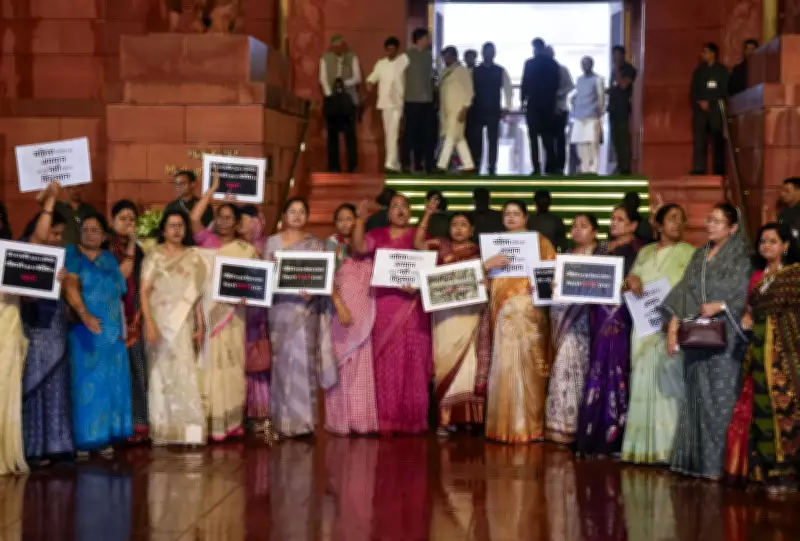
Women's Representation in 18th Lok Sabha: A Detailed Analysis of the 2024 Election Results
Data from the 2024 general elections reveals that women comprise approximately 14% of the 18th Lok Sabha, with 74 female Members of Parliament elected to serve the nation. This significant figure highlights the ongoing journey toward gender parity in Indian politics, though it also underscores the considerable distance still to be covered.
Party-Wise Distribution of Women Parliamentarians
The 74 women parliamentarians are distributed across 14 different political parties, reflecting a broad spectrum of political affiliations. The ruling National Democratic Alliance (NDA), led by the Bharatiya Janata Party, accounts for 37 of these female MPs. Meanwhile, the Congress-led INDIA bloc contributes 35 women representatives. Additionally, one woman MP each belongs to the Shiromani Akali Dal and the YSR Congress Party, both of which remain unaligned with the two major political alliances.
BJP Leads in Absolute Numbers, TMC in Proportional Representation
As the largest party in the House with 240 members, the BJP also boasts the highest number of women MPs at 31. This figure represents approximately 13% of the party's total parliamentary strength. Among its NDA allies, the Janata Dal (United) and the Lok Janshakti Party (Ram Vilas) each have two women MPs, while the Telugu Desam Party and Apna Dal (Soneylal) have one female representative each.

On the opposition side, the Congress party has 13 women members out of its total strength of 99 parliamentarians. Its INDIA bloc allies show varied representation: the Trinamool Congress has 11 women out of 29 MPs, the Samajwadi Party has 5 out of 37, and the Dravida Munnetra Kazhagam has 3 out of 22. The INDIA alliance also includes one woman MP each from the Nationalist Congress Party (Sharadchandra Pawar), the Rashtriya Janata Dal, and the Jharkhand Mukti Morcha.
Notably, while third in absolute numbers, the Trinamool Congress demonstrates the highest proportional representation of women among its Lok Sabha MPs at approximately 38%—a significant margin above other parties.
Political Discourse on Women's Representation
The issue of women's political representation gained prominence following Prime Minister Narendra Modi's address to the nation, delivered a day after the Women's Reservation Bill failed to pass in Parliament due to opposition blocking. In his speech, the Prime Minister criticized the Congress, Trinamool Congress, DMK, and Samajwadi Party as "anti-women" for their role in the bill's defeat.
West Bengal Chief Minister and Trinamool Congress supremo Mamata Banerjee—herself a former Lok Sabha member—strongly countered this characterization. "It is deeply unfortunate that the prime minister chose to mislead the nation rather than address it honestly," Banerjee stated in a social media post. "Let me put this on record. Trinamool Congress has always championed higher political representation for women. We have the highest proportion of female elected representatives in both Parliament and the state legislature. In the Lok Sabha, 37.9% of our elected members are women. In the Rajya Sabha, we have nominated 46% women members. The question of opposing Women's Reservation does not arise and never has."
Banerjee's comments come as her party prepares for assembly elections in West Bengal, scheduled for April 23 and 29, adding political context to the ongoing debate about gender representation in Indian democracy.
Analysis and Implications
The election of 74 women to the 18th Lok Sabha marks a step forward, yet the 14% representation remains below global averages and India's own aspirations for gender equality in governance. The disparity between parties in both absolute numbers and proportional representation highlights varying commitments to women's political participation.

- The BJP's 31 women MPs represent organizational efforts but still constitute only 13% of their parliamentary contingent.
- The Trinamool Congress's 38% women representation sets a benchmark for proportional inclusion.
- The failure of the Women's Reservation Bill underscores ongoing legislative challenges to institutionalize gender quotas.
As India's Parliament convenes with this composition, the performance and impact of these 74 women MPs will be closely watched, potentially influencing future electoral strategies and policy discussions around gender representation in Indian politics.





