

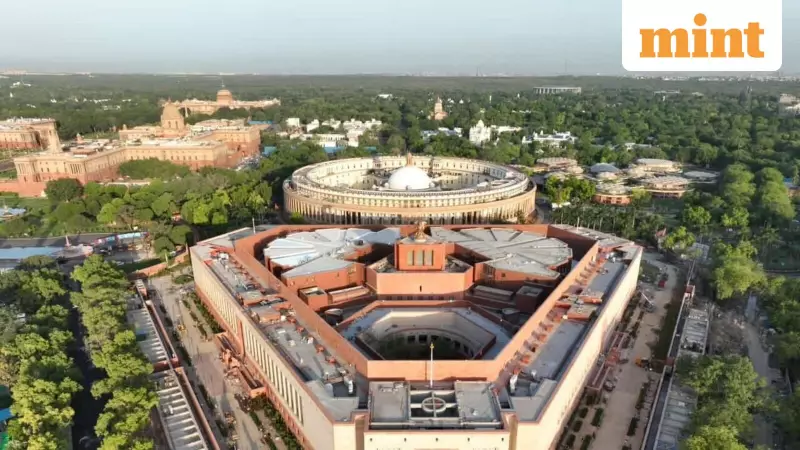
Budget Session 2026 Kicks Off with Presidential Address and Economic Focus
The Budget Session of Parliament officially commenced today, January 28, 2026, marking the beginning of a crucial legislative period for the nation. The session opened with a significant address by President Droupadi Murmu to the joint sitting of both Houses of Parliament, setting the tone for the upcoming financial discussions and policy debates.
Key Financial Events and Schedule
Following the presidential address, the Economic Survey of India is scheduled to be presented on January 29, 2026, providing an in-depth analysis of the country's economic performance and outlook. The highlight of the session will be the presentation of the Union Budget for 2026-27 by Finance Minister Nirmala Sitharaman on February 1, 2026, which falls on a Sunday this year. This budget presentation will be a historic moment as it marks Sitharaman's record ninth consecutive budget, underscoring her continued role in shaping India's fiscal policies.
The session is structured in two distinct parts to allow for comprehensive deliberation and examination of financial matters. The first part will primarily focus on:

- Financial business related to the Union Budget for 2026-27
- Discussion on the Motion of Thanks on the President's Address
The two Houses are scheduled to adjourn for a recess on February 13, 2026, and will reassemble on March 9, 2026. During this interim period, various Standing Committees will meticulously examine the Demands for Grants of different ministries and departments, ensuring thorough scrutiny of budgetary allocations.
The entire session will comprise a total of 30 sittings spread over 65 days, with the conclusion set for April 2, 2026. This extended duration allows for detailed discussions and legislative work, with essential legislative and other business expected to be taken up mainly during the second part of the session.
Legislative Agenda and Pending Bills
The government has outlined a focused legislative agenda for this session, with several key bills pending for consideration. While no new bills have been officially listed so far, the Lok Sabha secretariat has identified nine pending bills that are likely to be taken up. Among these are:
- Insolvency and Bankruptcy Code (Amendment) Bill: Aimed at reforming the debt resolution framework to enhance efficiency and transparency in insolvency proceedings.
- Securities Markets Code: Currently under scrutiny by the parliamentary panel on finance, this bill seeks to streamline regulations in the securities market.
- Motor Vehicles Amendment Bill 2026: Proposing more than 60 amendments to the Motor Vehicle Act of 1988 to modernize transportation laws and improve road safety.
- Seed Bill, 2026: Intended to replace the Seeds Act of 1966 and the Seeds (Control) Order of 1983, focusing on updating seed regulations to support agricultural growth.
Additionally, significant reports are expected during this session. A joint parliamentary committee is anticipated to table its report on the Viksit Bharat Shiksha Adhishthan Bill, 2025, which aims to overhaul higher education in India. Another panel will present its findings on the Jan Vishwas (Amendment of Provisions) Bill, 2025, designed to decriminalize a range of offences across various sectors, promoting ease of doing business.
The most critical legislative piece of this session will undoubtedly be the Finance Bill, 2026, which will establish the income tax rates for the upcoming financial year, directly impacting taxpayers and the economy at large.

Political Dynamics and Government Preparedness
Ahead of the budget session, the government convened an all-party meeting to foster cooperation and ensure the smooth functioning of Parliament. During this meeting, Parliamentary Affairs Minister Kiren Rijiju sought support from opposition leaders, emphasizing the government's readiness to discuss any important issues on the floors of the Houses as per parliamentary rules. The meeting was chaired by Defence Minister Rajnath Singh, highlighting the importance placed on bipartisan collaboration.
However, the government has firmly rejected opposition demands for discussions on specific acts such as the VB-G RAM G Act and the Special Intensive Revision (SIR) during this session. Minister Rijiju clarified that these issues have already been debated by both Houses, stating that "we cannot reverse the gear" on matters that have undergone previous parliamentary scrutiny.
This budget session is set against a backdrop of a volatile geopolitical situation, with the government expected to introduce reform measures aimed at shoring up economic growth. The focus will be on balancing fiscal prudence with strategic investments to stimulate the economy while managing borrowing costs effectively.
Comprehensive Timeline of Key Events
To provide clarity on the session's progression, here are the essential dates to remember:
- January 28, 2026: Commencement of the budget session with President Droupadi Murmu's address to the joint sitting of Parliament.
- January 29, 2026: Presentation of the Economic Survey of India, offering insights into economic trends and challenges.
- February 1, 2026: Union Budget 2026 presentation by Finance Minister Nirmala Sitharaman, a landmark event for fiscal planning.
- February 13, 2026: Conclusion of the first half of the budget session, followed by a recess for committee work.
- March 9, 2026: Commencement of the second half of the budget session, focusing on legislative business.
- April 2, 2026: Conclusion of the entire budget session, wrapping up 65 days of parliamentary deliberations.
As the session unfolds, all eyes will be on the government's ability to navigate economic challenges, implement reforms, and foster constructive dialogue across party lines to drive India's growth trajectory forward.





