

The Budget Session of Parliament for 2026 commenced today with a significant address by President Droupadi Murmu to a joint sitting of both Houses. This session marks a pivotal moment in India's legislative calendar, setting the stage for crucial economic discussions and policy decisions.
Session Schedule and Key Dates
The session is structured to span 30 sittings over a period of 65 days, concluding on April 2, 2026. It will be divided into two parts, with the first part focusing on the Union Budget 2026–27 and the Motion of Thanks on the President's Address. A recess is scheduled from February 13 to March 9, allowing Standing Committees to thoroughly examine the Demands for Grants from various ministries and departments.
Economic Survey and Union Budget
Tomorrow, on January 29, the Economic Survey will be tabled in Parliament. Prepared by the Economic Division of the Finance Ministry under the guidance of the chief economic adviser, this document provides a comprehensive review of India's economic performance and key indicators for the fiscal year 2025–26. It also offers an outlook for the upcoming fiscal year, serving as a precursor to the Union Budget.

The Union Budget 2026–27 is set to be presented on February 1, which will be India's first Sunday Budget. This timing adds a unique aspect to the budgetary process, potentially influencing public engagement and media coverage.
Pending Bills and Legislative Agenda
The Lok Sabha secretariat has identified nine pending Bills that are expected to be discussed during this session. Notable among these are the Insolvency and Bankruptcy Code (Amendment) Bill and the Securities Markets Code, both of which are currently under review by the parliamentary finance panel. These bills aim to address critical issues in India's financial and regulatory frameworks.
All-Party Meeting and Political Cooperation
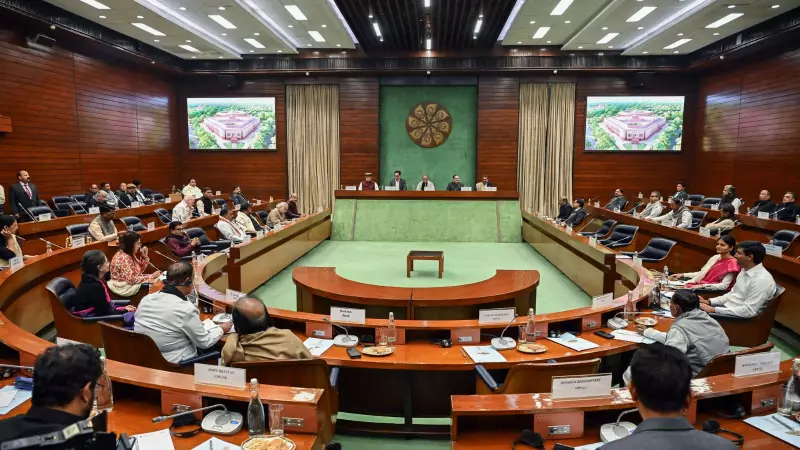
Ahead of the session, an all-party meeting was chaired by Union Defence Minister Rajnath Singh. The meeting included Union Ministers JP Nadda and Kiren Rijiju, Union MoS (I/C) Arjun Ram Meghwal, and Union MoS L Murugan. During this gathering, political leaders outlined key issues likely to be raised and assured the government of their cooperation, fostering a collaborative environment for the session.
Implications and Expectations
This Budget Session is crucial as it sets the economic agenda for the nation. With the Economic Survey providing insights into past performance and future projections, and the Union Budget outlining fiscal policies, stakeholders across sectors are keenly watching the developments. The extended session duration allows for in-depth discussions on pending legislation and budgetary allocations, impacting governance and economic stability.
As the session progresses, live updates will continue to track important debates, bill passages, and reactions from political parties. The focus remains on how these legislative actions will shape India's economic trajectory in the coming year.






