ESPN's Memorial Segment for Rondale Moore Features Wrong Player Photo, Sparking Outrage
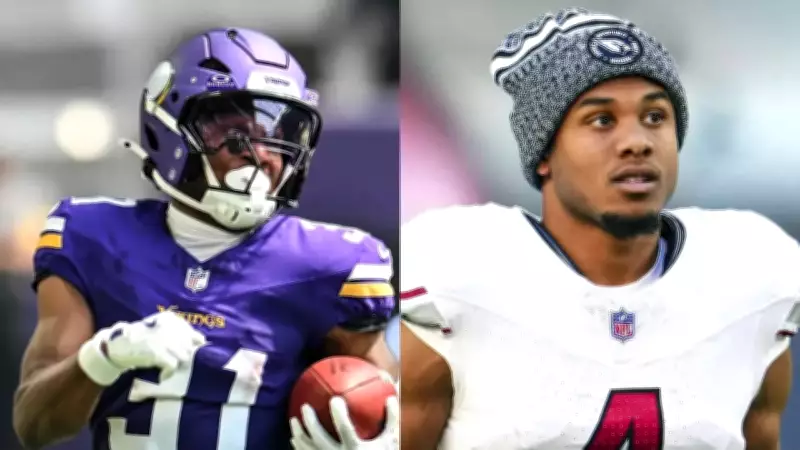
The sports broadcasting world was rocked by a deeply unfortunate error when ESPN's late-night SportsCenter attempted to honor Minnesota Vikings wide receiver Rondale Moore, who died Saturday from what police believe was a self-inflicted gunshot wound at age 25. During Scott Van Pelt's segment dedicated to Moore's passing, the network displayed a graphic featuring the wrong player's face, substituting Minnesota wide receiver Myles Price instead of Moore.
Viewers Spot Mistake Immediately as Wrong Image Airs Nationally
The initial airing occurred at 1:07 a.m. ET, with the clip circulating online within minutes. Alert viewers watching the overnight SportsCenter immediately noticed the discrepancy: Moore's name and dates appeared next to a photo of Price in a Vikings uniform. For anyone familiar with the team roster, it was painfully obvious that the network had framed the wrong player as the one who had just died.
As detailed by Awful Announcing's Drew Lerner, the first version of the show aired with Price's photo prominently displayed. When SportsCenter re-aired later, ESPN had already pulled the segment, re-taped it with Van Pelt, and replaced the erroneous image with an actual photograph of Moore.

ESPN Issues On-Air Apology Amid Growing Backlash
Another ESPN anchor, David Lloyd, delivered an on-air apology during a Sunday night SportsCenter broadcast, acknowledging both the error and the significant backlash that had built throughout the day. The anger from fans and commentators was immediate and vocal.
Commentator Dov Kleiman posted the clip with the caption: "Pathetic: Scott Van Pelt did a dedicated segment for Rondale Moore detailing his passing on ESPN and used a picture of the wrong player...ESPN used a picture of Myles Price instead of Moore. Absolutely ridiculous."
Fans universally condemned the mistake as lazy and disrespectful, arguing that basic image verification should be standard protocol when discussing a player who has recently died. One fan noted it was "kind of disrespectful" that no one double-checked the photo before broadcast, while another called it "definitely a bad look" for a show that typically handles tributes with care and precision.
Systemic Photo Database Errors Revealed as Root Cause
Myles Price, who did nothing wrong in this situation, became the unintended face of a viral mistake. The fellow Vikings wide receiver now wears No. 4, the same number that previously belonged to Moore. Moore had played only one game for Minnesota in the 2025 preseason opener against the Houston Texans before suffering a season-ending knee injury.
In a Sunday column, Mike Florio explained how such errors occur behind the scenes, revealing that photo services used by ESPN and other media outlets had already misfiled multiple images of Price as if they were Moore. These services provide most of the photographs that television networks and websites use when creating graphics.
The process typically involves producers typing in a player's name, receiving a gallery of images, and selecting one. If the service has mislabeled a photograph, the wrong face appears under the correct name. Florio admitted he nearly made the same mistake on his own website that night before realizing Moore should not appear in a white Vikings jersey in any current photograph. He later summarized the situation with one telling line: "It's not an excuse, but an explanation."
Broader Implications for Media Standards and Verification Processes
The core issue extends beyond this single incident. While ESPN's staff should have caught the error, and viewers understandably don't care whether the incorrect tagging originated with an outside vendor, this represents more than a one-off glitch. It highlights a systemic problem where mislabeled photographs sit in databases until someone retrieves them for a segment that suddenly carries immense significance.

Price's image, inadvertently inserted into a tribute meant for his late teammate, transformed a somber moment into a viral clip questioning ESPN's editorial standards. While Moore's tragic death remains the central story, this error demonstrates how little margin exists when networks discuss matters of such gravity while relying on systems that have contained inaccuracies for extended periods.
The incident raises serious questions about verification processes in fast-paced news environments and the responsibility of major networks to ensure accuracy, particularly when honoring individuals who have passed away. It serves as a stark reminder that technological systems, while efficient, require human oversight and quality control, especially during emotionally charged broadcasts.