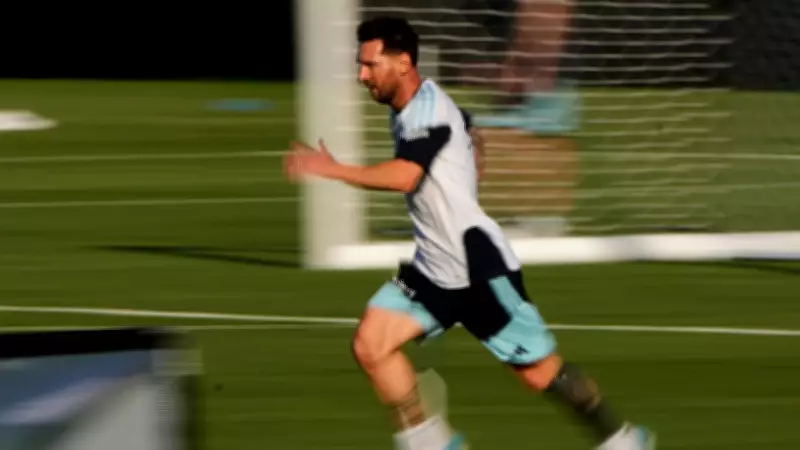
The 2026 FIFA World Cup is set to be a supersized edition, featuring 48 teams, 104 games, 39 days, 16 venues, and three host nations: the United States, Canada, and Mexico. This unprecedented expansion marks a significant shift from the previous 32-team format that had been in place since 1998.
A Historic Decision
In January 2017, the FIFA Council approved Gianni Infantino's proposal to expand the tournament. Infantino, who became FIFA president in 2016 amid controversy, described it as a historic decision to shape the World Cup for the 21st century. He emphasized that football is more than Europe and South America and that more countries should have the chance to dream.
The expansion has divided opinion. Former Liverpool manager Jurgen Klopp feared it would dilute the competitive balance, while former US forward Clint Dempsey suggested that the tournament effectively starts only at the round of 32. On the other hand, former Arsenal manager Arsene Wenger, now FIFA's chief of global football development, called it the right number for the game's biggest show.

Numbers Game
To illustrate the scale: every World Cup from 1998 to 2022 featured 64 games. In 2026, 72 games alone will be required to reach the round of 32—eight more than an entire previous tournament. This is a far cry from the inaugural 1930 World Cup in Uruguay, which had 13 teams, 18 games, and just three stadiums.
Participant numbers have grown over time: 16 teams in 1934, 24 from 1982, 32 from 1998, and now 48. The move aims to make the game truly global and boost FIFA's revenues. More berths mean more nations, particularly from Africa and Asia, can qualify. Debutants in 2026 include Curaçao (the smallest country by population ever to qualify), Jordan, Cape Verde, and Uzbekistan.
In Qatar 2022, there were five African nations and 13 from Europe. The expanded format offers a more even distribution: 16 from Europe, 10 from Africa, nine from Asia, six from South America, six from CONCACAF, and New Zealand.
No Group of Death?
Critics worry that the expansion eliminates the traditional 'Group of Death' spectacle. While Group I features France, Senegal, Norway, and Iraq, and Group L includes England, Croatia, and Ghana, these matchups lack the intensity of past groups like 1982's Group C (Italy, Brazil, Argentina) or 2018's Group F (Germany, Sweden, Mexico, South Korea).
Additionally, with eight of the 12 third-placed teams advancing to the round of 32, teams have a safety net. Naysayers argue that FIFA's more-matches-more-money approach borders on overkill, straining players and turning a working-class sport into a corporate product.
Lessons from Euro 2016
Infantino's vision was partly inspired by Euro 2016, when UEFA expanded from 16 to 24 teams and introduced a third-placed qualifier system. That tournament saw Iceland shock England, but also Portugal limp to the title after finishing third in their group and winning only one game in 90 minutes.
This leads to the Red Queen Effect: as the Red Queen told Alice, it takes all the running you can do to stay in the same place. To get somewhere else, you must run twice as fast. The 2026 World Cup will test whether expansion enhances or dilutes the beautiful game.