

Recent parliamentary sessions have seen a resurgence of late-night and overnight sittings, echoing a long and dramatic history within India's hallowed legislative halls. While the Winter Session of 2025 witnessed Trinamool Congress MPs staging an overnight protest on the old Parliament steps, perhaps the most curious chapter of parliamentary sleepovers dates back to 1964, when an MP took refuge on the grounds not to protest a bill, but to evade the police.
The Modern Trend of Midnight Parliament
The past year has been marked by Parliament pushing its working hours deep into the night. In April 2025, the Rajya Sabha debated until 4 am on the Waqf Amendment Bill and President's Rule in Manipur. Later, in December 2025, the Lok Sabha concluded discussions on the contentious G-RAM-G Bill at 1 am, with the Rajya Sabha passing it at 2 am the following day. The recently concluded Winter Session added to this trend, with Trinamool Congress Rajya Sabha MPs, equipped with sleeping bags and homemade food, protesting overnight against the government's push of the G-RAM-G legislation.
While the most famous midnight sitting remains the historic session of August 14-15, 1947, which heralded India's Independence, the first instance of an MP staying overnight had a far more personal and tactical motive.

Mani Ram Bagri: The "Troublesome" Parliamentarian
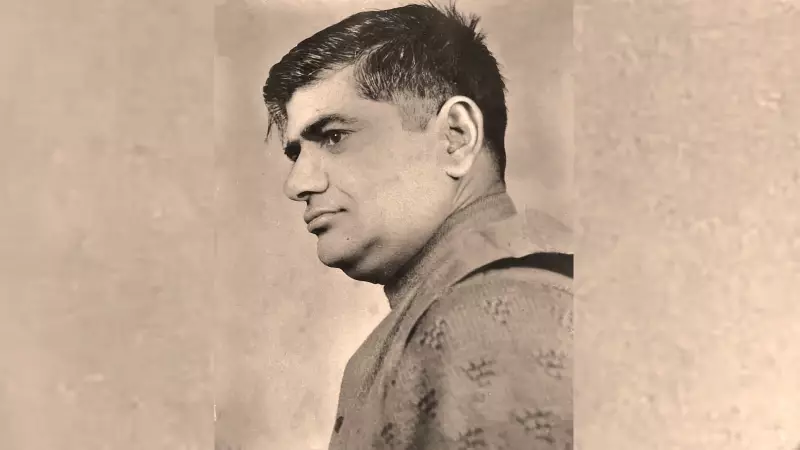
The MP at the centre of this unusual event was Mani Ram Bagri, a 42-year-old first-time Lok Sabha member from Hisar (now in Haryana), elected in 1962 on a Socialist Party ticket. A former Punjab MLA known for his quick wit, Bagri was a passionate but profoundly disruptive force in Parliament.
His parliamentary journey began turbulently; his very first session led to a seven-day suspension for obstructing proceedings. Over the next five years, he repeatedly disrupted the President's address, was frequently asked to leave by the Speaker, and faced bans totalling over 30 days. Prime Minister Jawaharlal Nehru once described him in a letter as a "very troublesome person," and Bagri, in turn, once accused Nehru of speaking "like a dictator."
Yet, Bagri was also a remarkably active MP. In his first term alone, he asked 1,700 questions and intervened in proceedings over 500 times, covering a wide spectrum from labour and finance to foreign affairs and national security.
The Tent on the Lawn: A Sanctuary from Arrest
Bagri's activism extended beyond the House. In 1964, his participation in a dharna, including some outside the PM's residence, led authorities to initiate criminal proceedings against him. Fearing imminent arrest, Bagri sought the protection of the Lok Sabha Speaker.
The Speaker, after consulting senior leaders, granted a unique concession: Bagri could remain on Parliament grounds but was prohibited from entering the building after 7 pm. This protection stemmed from a privilege established a decade earlier, which deemed Parliament precincts sacrosanct and barred arrests there without the Speaker's permission—a rule that originated from developments in the Madras Legislative Assembly.
In April 1964, armed with this permission, Mani Ram Bagri pitched a tent on the Parliament House lawns. His makeshift abode, complete with a table, chair, and a cot for the pleasant Delhi spring nights, became a spectacle for visitors. Parliament staff arranged for him to use washroom and other facilities.
The situation escalated when Bagri tried to enter the building after the 7 pm curfew, leading to a heated debate in the House about the extent of parliamentary privilege and whether it should offer sanctuary to members facing arrest. The Speaker eventually clarified the limits of this privilege and warned Bagri the concession was not indefinite.
Legacy and Aftermath
Parliamentary records suggest Bagri dismantled his tent later that evening and left the grounds without being arrested. However, the authorities learned from this episode. On August 16, 1965, the police arrested him following a car chase after he exited Parliament. Bagri's political journey continued; he was jailed during the Emergency and went on to win two more Lok Sabha terms.

The story of Bagri's tent is more than a curious anecdote. It underscores the tension between parliamentary privilege and the law, a debate that resonates in today's context of intense legislative battles and extended sittings. It serves as a vivid reminder of the lengths to which members have gone, historically, under the protective umbrella of parliamentary democracy, and how the institution itself has navigated these complex challenges.





