Parliamentary Panel Condemns Youth Congress Protest at Global AI Summit
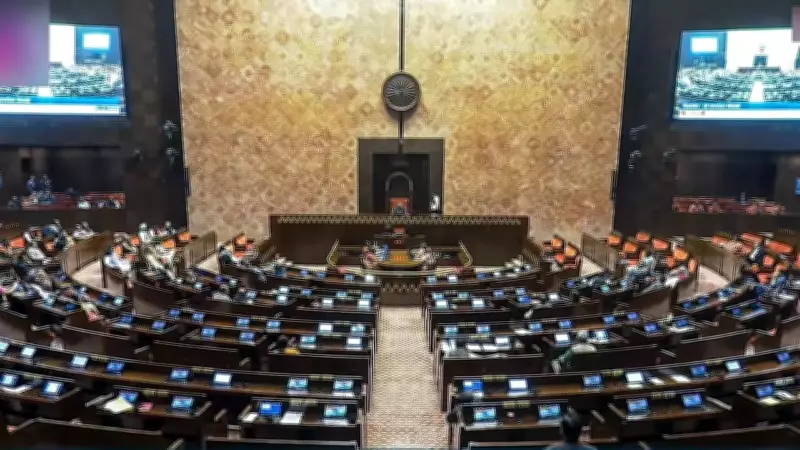
NEW DELHI: The political controversy surrounding the Youth Congress protest at the global AI summit reverberated through Parliament on Tuesday as a key committee passed a resolution condemning the incident. The move was met with significant dissent from Members of Parliament representing various opposition parties, highlighting deep political divisions over the matter.
Committee Resolution and Voting Divide
The resolution, shared by the panel's chairperson Nishikant Dubey, stated: "The committee would like to place on record its appreciation for successfully organizing the India AI Impact Summit by the Ministry of Electronics & IT under the able leadership of Prime Minister Narendra Modi. The committee also condemns the unfortunate incident that occurred on February 20, 2026, at the venue of the India AI Summit."
Official sources confirmed the resolution was carried by a majority vote, with 10 MPs affiliated with the BJP-led alliance voting in favor. However, six opposition MPs—representing the Congress, Trinamool Congress (TMC), Shiv Sena (UBT), and Samajwadi Party—voted against it, creating a clear partisan split.

Opposition Criticism and Political Accusations
An opposition MP who participated in the meeting claimed they protested because the committee was unnecessarily wading into "politics" over the Youth Congress demonstration. This MP noted that even members from non-Congress parties voted against the resolution, despite some like the Samajwadi Party having previously criticized the shirtless protest by Youth Congress members.
BJP MP Amar Pal Maurya, who proposed the resolution, defended it in comments to media outlets: "The resolution was for condemning the incident that tried to malign the country's image and was not against any specific political party. Everyone should have supported it. In fact, those who did not were engaging in politics themselves."
Sources identified specific opposition MPs who voted against the resolution, including:
- Priyanka Chaturvedi of Shiv Sena (UBT)
- Devesh Shakya of Samajwadi Party
- Saket Gokhale of Trinamool Congress (TMC)
Unusual Committee Action and Procedural Context
While it is not common for parliamentary committees to address issues outside their formally listed agenda, official sources explained that rules permit them to convey their collective sense on matters of significant importance. This is particularly relevant when the subject matter falls under the jurisdiction of the ministry overseen by the committee.
In this case, the India AI Impact Summit was hosted by the Ministry of Electronics & Information Technology, which is directly supervised by the committee chaired by Nishikant Dubey. This connection provided the procedural justification for the committee to take up the matter despite its politically charged nature.
Summit Achievements and Economic Impact
The parliamentary resolution also highlighted the substantial achievements of the five-day India AI Impact Summit, describing it as a "grand success." The document emphasized that the summit's declaration was supported by 91 countries and numerous leading technology companies, all committing to inclusive artificial intelligence development.
According to the resolution, participating companies announced over USD 200 billion in AI investment commitments for India. Additionally, Google made significant pledges beyond its financial investment, committing to establish a major data center in India and to lay a direct sea cable link between India and the United States, enhancing digital connectivity between the two nations.
The parliamentary committee's action underscores how domestic political controversies can intersect with international technological events, creating complex debates about parliamentary procedure, political messaging, and India's global image in the rapidly evolving field of artificial intelligence.