

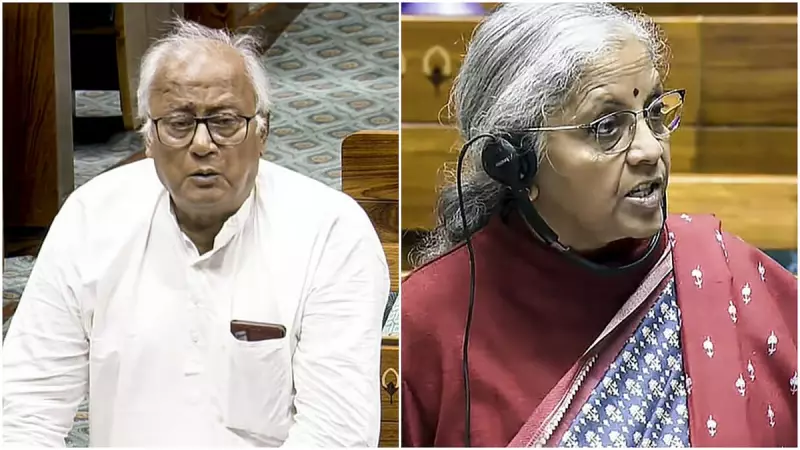
Finance Minister Nirmala Sitharaman delivered a sharp rebuttal in the Lok Sabha on Thursday after a Trinamool Congress (TMC) member of parliament objected to her delivering a speech in Hindi. The exchange occurred during a debate on a significant financial bill, highlighting ongoing tensions over language use in India's parliamentary proceedings.
Parliamentary Debate Takes a Linguistic Turn
The incident unfolded on December 4, 2025, as the house discussed the Health Security Cess Bill. Finance Minister Nirmala Sitharaman had earlier addressed the assembly in Hindi, outlining the government's position on the proposed legislation. Following her remarks, TMC MP Saugata Roy rose to speak and expressed his difficulty in comprehending the minister's address.
Roy stated that he had struggled to follow the nuances of Sitharaman's speech because it was delivered in Hindi. His objection brought the issue of language, a perennially sensitive topic in Indian politics, to the forefront of the parliamentary session.

Sitharaman's Firm Rebuttal
In a firm response, Finance Minister Nirmala Sitharaman defended her right to speak in Hindi. She rebuked the TMC MP's objection, emphasizing the constitutional status of Hindi and its use in parliamentary affairs. Sitharaman's stance was clear: members of the Lok Sabha should be prepared to engage in proceedings conducted in the official languages recognized by the Constitution.
The Finance Minister's rebuttal was not just about language but also about the principle of participation in national debates. She implied that understanding Hindi is part of engaging with the central legislative process, especially on critical matters like the National Security Cess Bill related to health security.
Implications for Parliamentary Discourse
This exchange underscores a deeper, recurring debate in Indian politics regarding linguistic diversity and national integration. While Hindi is designated as an official language of the Union, Parliament often sees discussions in multiple languages, with simultaneous interpretation facilities available.
The confrontation between the Union Finance Minister and the opposition MP from West Bengal points to the political dimensions of language. It raises questions about accessibility and inclusivity in legislative debates, especially for members from non-Hindi speaking states. The incident on December 4 is likely to fuel further discussion on the protocols and practices of communication within India's highest legislative body.
As the Lok Sabha moves forward with other legislative business, the clarity and mode of communication will remain vital for democratic deliberation. The debate on the Health Security Cess Bill, now marked by this linguistic controversy, highlights how procedural issues can sometimes overshadow substantive policy discussions.






