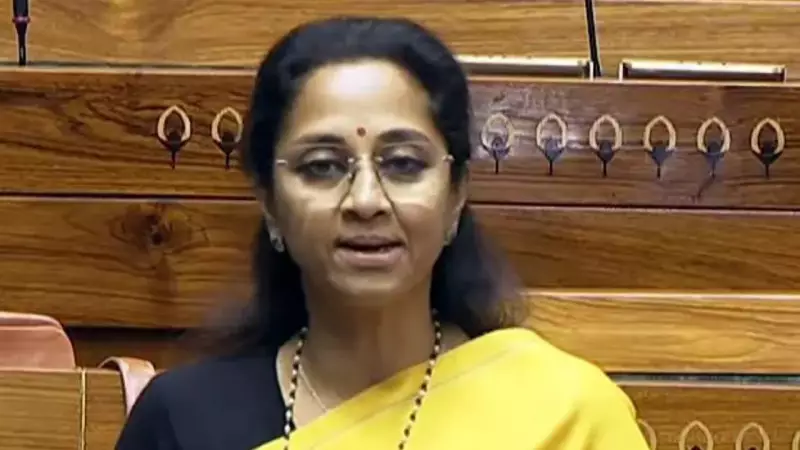
In a significant move aimed at protecting employees from the encroachment of work into personal life, Member of Parliament Supriya Sule has tabled a pioneering private member's Bill in the Lok Sabha. Titled 'The Right to Disconnect Bill, 2025', the proposed legislation seeks to legally empower workers to switch off from work-related electronic communications outside their official hours.
The Core Provisions of the Bill
Introduced in the Lower House on Friday, the Bill outlines a framework to foster a healthier work-life balance in India's increasingly digital workplace. A key provision mandates that entities—including companies and societies—face a financial penalty for non-compliance. The proposed sanction is set at 1 per cent of the total remuneration of its employees.
The Bill argues that while digital tools offer flexibility, they have dangerously blurred the lines between professional and personal time. It cites studies showing that the expectation of 24/7 availability leads to sleep deprivation, stress, and emotional exhaustion among employees. This phenomenon, referred to as 'telepressure', along with the constant checking of emails, is identified as a major disruptor of work-life equilibrium.

Addressing Digital Age Challenges
The legislation highlights the risk of 'info-obesity', a condition where the brain is overtaxed by the relentless monitoring of work messages. To counter this, the Bill champions the right of employees to ignore employer calls and emails during off-hours, thereby respecting their personal space.
Recognizing the diverse needs of businesses, the proposal offers flexibility. It leaves it to individual companies to negotiate specific terms of service regarding disconnection with their employees. Furthermore, it stipulates that if an employee does agree to work beyond scheduled hours, they must be paid overtime at their standard wage rate, aiming to curb unpaid overtime fueled by digital connectivity.
Beyond Disconnection: Holistic Employee Welfare
The 'Right to Disconnect Bill, 2025' also proposes supportive measures beyond regulation. It calls for counselling services to raise awareness about the reasonable use of digital tools. In a novel step, it envisions the establishment of digital detox centres to help individuals break free from digital distractions and reconnect with their immediate surroundings.
Supriya Sule framed the Bill as a forward-looking measure for employee welfare. "It aims to foster a better quality of life and a healthier work-life balance by reducing the burnout caused by today's digital culture," she stated on social media platform X.
A Trio of Progressive Bills
Alongside the Right to Disconnect Bill, Sule introduced two other private member Bills. The Paternity and Paternal Benefits Bill, 2025 seeks to introduce paid paternal leave, supporting fathers' involvement in early childcare and maternal well-being. The Code on Social Security (Amendment) Bill, 2025 aims to recognize platform-based gig workers as a distinct category, ensuring them minimum wages, regulated hours, and social security benefits.
This legislative push underscores a growing parliamentary focus on modernizing India's labor laws to address the unique challenges of the digital economy and contemporary family structures.