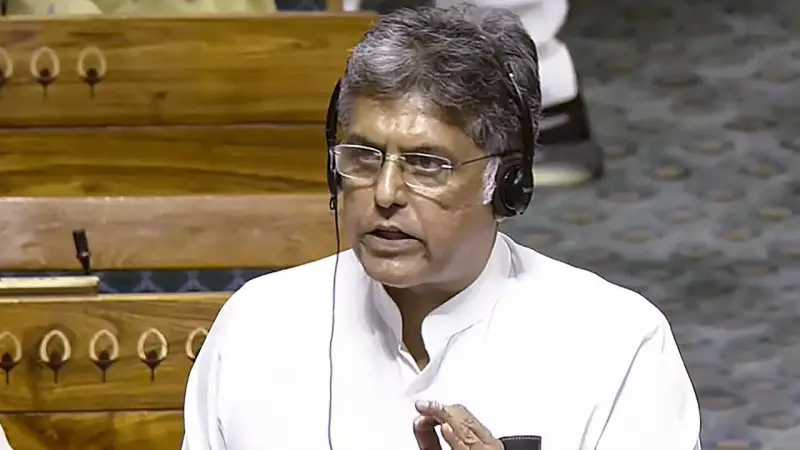
In a significant move aimed at reforming parliamentary democracy, Congress Member of Parliament Manish Tewari has once again introduced a private member's bill in the Lok Sabha. The proposed legislation seeks to empower parliamentarians to vote independently on most legislative matters, challenging the long-standing dominance of the party whip.
The Core Objective: Promoting Independent Lawmaking
The bill, introduced by the Chandigarh MP on Friday, marks the third such attempt after previous introductions in 2010 and 2021. Tewari frames the initiative as a crucial step towards "promoting good lawmaking" and liberating MPs from what he describes as "whip-driven tyranny." The central aim is to amend the Tenth Schedule of the Constitution, widely known as the anti-defection law.
This law, added by the Constitution (Fifty-second Amendment) Act, 1985, currently mandates the disqualification of a member if they vote or abstain from voting in the House contrary to the official direction issued by their political party. Tewari's bill seeks to drastically narrow the scope of this provision.

Key Provisions of the Proposed Amendment
The proposed amendment outlines specific conditions under which an MP would face disqualification. According to the bill's statement of objects, an MP would incur loss of membership only when defying the party whip on critical motions directly related to government stability or finance.
These specifically include:
- Confidence Motions
- No-Confidence Motions
- Adjournment Motions
- Money Bills or Financial Matters
In all other legislative votes, such as on ordinary bills and discussions, MPs would have the freedom to vote according to their conscience or the interests of their constituents without fear of disqualification.
Transparency and Appeal Process
The bill also introduces measures for greater transparency and due process. It calls for a provision requiring the Chairman or Speaker of the House to formally announce any direction issued by a political party concerning the aforementioned critical motions. During this announcement, the presiding officer must explicitly inform members that defiance will lead to automatic cessation of their membership.
Furthermore, Tewari's proposal includes a right to appeal for the affected member. A member would have the right to appeal against the cessation of membership to the Chairman or Speaker within 15 days from the date of disqualification. The appeal must be disposed of within a period of 60 days from the date of its receipt, ensuring a timely resolution.
A Long-Standing Advocacy for Parliamentary Reform
Sharing a media report about his bill on social media platform X, Tewari highlighted the persistence of his effort, stating it was introduced "for the third time - 2010, 2021, and now, in 2025." When asked by PTI if the bill's aim was to remove the "tyranny of whip & promote good lawmaking," the MP responded unequivocally: "Absolutely."
This legislative push reignites the debate on the balance between party discipline and individual parliamentary responsibility. If passed, the amendment could fundamentally alter the dynamics of lawmaking in India, allowing for more diverse and potentially constituency-focused voting patterns on a wide range of issues, while retaining party control on matters essential to government survival.