

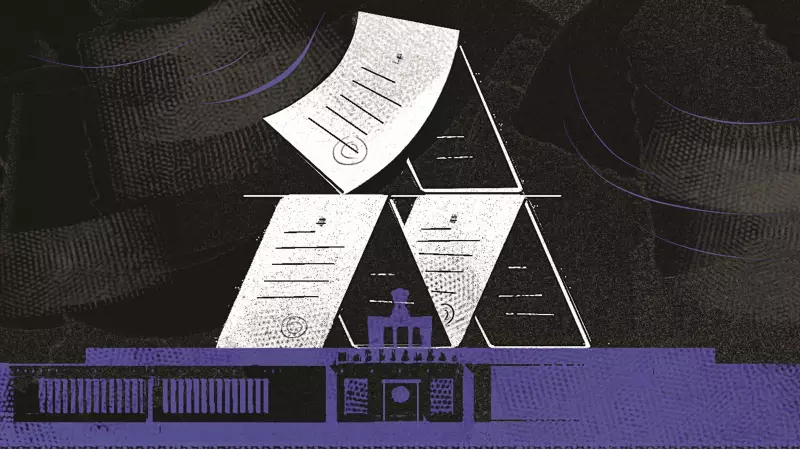
The recently concluded Winter Session of Parliament in New Delhi has sparked serious concerns about the health of India's democracy, according to Congress MP Shashi Tharoor. He argues that the government's push for rapid legislative action is transforming Parliament from a deliberative body into a mere rubber stamp for executive decisions.
The Blitzkrieg of Legislation and Bypassed Scrutiny
Tharoor points to the passage of several high-stakes bills during the session as evidence of a troubling trend. Key legislation, including the Sabka Bima Sabki Raksha (Amendment of Insurance Laws) Bill, the SHANTI (Nuclear Energy) Bill, and the Viksit Bharat-G RAM G Bill (intended to replace MGNREGA), was pushed through with minimal discussion. The government has labelled this a "productive session," but Tharoor questions the cost of such productivity, suggesting it sacrifices essential democratic scrutiny for speed.
The data reveals a stark decline in parliamentary oversight. In the 17th Lok Sabha, only 16% of bills were referred to parliamentary standing committees for detailed examination. This is a dramatic drop from the 71% of bills sent to committees during the 15th Lok Sabha (UPA-II). Furthermore, nearly 35% of bills in the current Lok Sabha were passed with less than one hour of debate on the floor of the House.

The Critical Role of Committees Ignored
Tharoor emphasizes that parliamentary committees are not bureaucratic hurdles but the "heartbeat of a functional democracy." These committees allow for expert testimony, cross-party questioning, and refinement of complex legislation away from the political theatrics of the main chamber. By rejecting the Opposition's pleas to refer bills like the Insurance Amendment Bill (allowing 100% FDI) and the SHANTI Bill to committees, the government effectively silenced stakeholders.
Insurance employees' unions, nuclear safety experts, and MGNREGA workers were denied a platform to voice their fears and concerns about the new laws that will directly impact their lives. Tharoor draws a parallel to the repealed farm laws, which were rushed without committee scrutiny and later led to massive protests, arguing that "lawmaking without deliberation is like building a dam without studying environmental impact."
From House Floor to Street Protests: A Dangerous Path
The most egregious example cited is the passage of the G RAM G Bill in the Rajya Sabha past midnight, replacing the two-decade-old MGNREGA framework. Tharoor warns that when the government treats the Opposition as an "irrelevant vestige" and surrenders its power of the purse through practices like the "guillotine" (passing budgets without discussion), it hollows out Parliament's sanctity.
He asserts that a robust democracy rests on the Three Ds: Debate, Dissent, and Deliberation. A regime that uses its numerical majority to stifle these processes is not strong but insecure. The final consequence, Tharoor cautions, is that citizens and opponents are left with no democratic recourse but to "take the argument from the floor of the House to the dust of the streets." He suggests that any future protests against bills like G RAM G will be a direct result of the government's refusal to allow proper parliamentary shaping of the legislation.
In conclusion, Tharoor presents an ironic contrast: while India celebrates its status as the "Mother of Democracy," its parliamentary system is being slowly strangled by a pattern of bypassing scrutiny. The failure, he insists, lies not with democracy itself, but with rulers who are failing to uphold its essential systems, forgetting that in a true democracy, "the minority must have its say, even if the majority ultimately has its way."






