

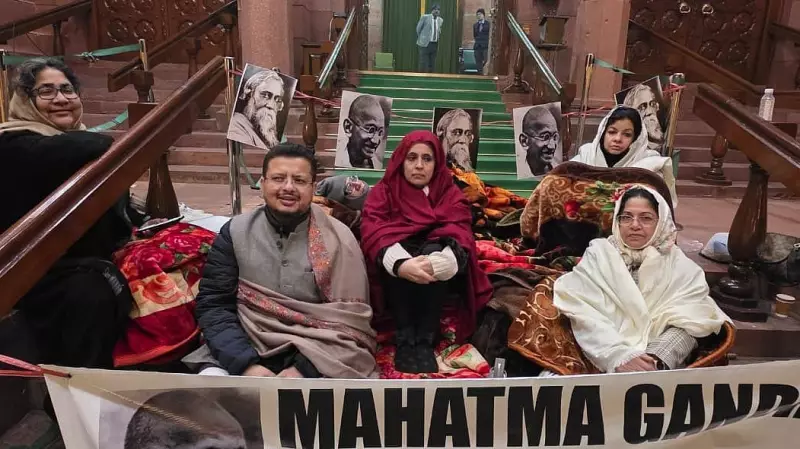
The Indian Parliament witnessed a dramatic late-night session on 18 December 2025, culminating in the passage of a significant new legislation. The Viksit Bharat Guarantee for Rozgar and Ajeevika Mission (Gramin) Bill, commonly referred to as the VB-G RAM G Bill, was approved amid strong protests from opposition members, who staged an overnight sit-in demonstration within the Parliament complex.
Midnight Passage and Opposition Protest
The legislative process for the VB-G RAM G Bill extended well past normal hours. The Rajya Sabha, the upper house of Parliament, finally gave its nod to the bill post midnight. This late-night approval followed intense debate and objections from opposition parties. In a show of dissent, opposition MPs chose to sit on an overnight protest on the Parliament premises, directly challenging the passage of the bill and the manner in which it was conducted.
Understanding the VB-G RAM G Bill
While the full text and specific provisions of the bill were not detailed in the initial report, its name provides key insights into its objectives. The Viksit Bharat Guarantee for Rozgar and Ajeevika Mission (Gramin) appears to be a rural-focused scheme aimed at employment (Rozgar) and livelihood (Ajeevika). It is positioned as a guarantee under the broader Viksit Bharat (Developed India) vision. The bill's passage suggests a major policy push by the government in the realm of rural job creation and livelihood security, an area historically linked to schemes like MGNREGA.

Political Repercussions and Next Steps
The opposition's decision to stage an overnight protest highlights the deep political divisions surrounding this legislation. Such protests are a parliamentary tactic to draw public attention to grievances about process or content. The bill's passage, however, means it has cleared all legislative hurdles in Parliament and will now proceed for presidential assent before becoming law. The fallout from this late-night parliamentary episode is likely to influence political discourse, with the opposition expected to continue criticizing the bill's provisions and the government's strategy in pushing it through.
The events of 18 December 2025 underscore the high-stakes nature of legislative work in Indian democracy. The passage of the VB-G RAM G Bill marks a significant policy shift for rural employment, while the accompanying protest signals ongoing tensions between the treasury and opposition benches on matters of national importance.






