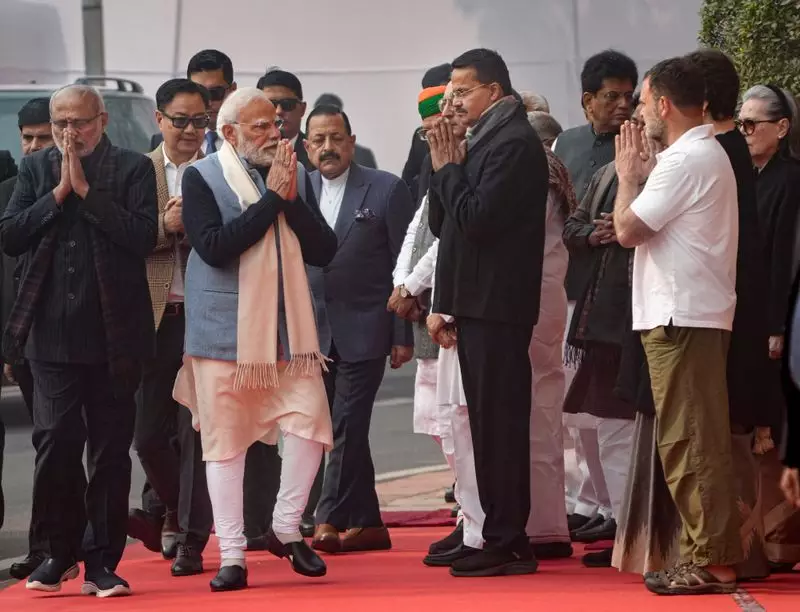
The recently concluded Winter Session of Parliament, which ran from December 4 to December 21, 2023, has left a complex legacy. While the government successfully pushed through a significant legislative agenda, the session was equally notable for the critical issues it failed to address, leading to a narrative of missed priorities and unfinished democratic discourse.
A Legislative Push Amidst Opposition Absence
The government leveraged its numerical strength to pass several landmark bills. The most prominent were three new criminal law bills intended to replace colonial-era statutes: the Bharatiya Nyaya Sanhita, the Bharatiya Nagarik Suraksha Sanhita, and the Bharatiya Sakshya Bill. Furthermore, the Telecommunications Bill, 2023 was also passed, aiming to modernize the sector's regulatory framework.
However, this legislative productivity occurred against the backdrop of a significant disruption. 146 Members of Parliament from the Opposition were suspended for demanding a discussion on the December 13 Parliament security breach. This mass suspension, unprecedented in scale, meant that crucial debates on these transformative bills lacked substantive scrutiny from the principal opposition voices. The passage of bills in a nearly empty Opposition lobby raised questions about the depth of parliamentary examination.

The Glaring Omissions: What the Session Sidestepped
Beyond the suspensions, the session's agenda revealed significant omissions. A paramount issue was the continued silence on the situation in Manipur, which has endured ethnic strife for over seven months. Despite repeated demands, the government did not allow a full-fledged discussion on the state, preventing Parliament from fulfilling its role as a forum for national reconciliation on grave internal matters.
The trigger for the suspensions—the major security breach on December 13—itself did not receive a dedicated, focused debate. While the government cited an ongoing investigation, the lack of a ministerial statement or a structured discussion in the House left many questions unanswered about the systemic failures that allowed intruders to enter the Lok Sabha chamber.
Other pressing issues like inflation, unemployment, and the preparedness for the upcoming Census also found little space in the proceedings. The session's focus remained tightly controlled, leaving little room for discussions initiated by the Opposition on matters of public urgency.
A Session of Contrasts: Productivity Versus Dialogue
The Winter Session of 2023 thus presents a stark contrast. On one hand, it was highly productive in terms of legislative output, passing bills that could reshape India's criminal justice and telecom landscapes. The government demonstrated its ability to advance its policy agenda efficiently.
On the other hand, the session fell short on several core parliamentary functions: executive accountability, representing public grievance, and conducting thorough deliberation. The avoidance of debates on Manipur and security, coupled with the mass suspensions, created an environment where confrontation replaced conversation.
This approach has consequences. It risks making Parliament a mere chamber for rubber-stamping government business rather than a vibrant institution for debate and oversight. The sidelining of the Opposition undermines the principle of collective wisdom in lawmaking, potentially affecting the quality and perceived legitimacy of the laws passed.
In conclusion, the Winter Session will be remembered for the laws it created but also for the discussions it stifled. The new criminal codes and telecom law are now on the statute books, but the silence on Manipur and the circumstances of the security breach remain a gap in the nation's parliamentary record. The session underscores a pressing need to rebalance efficiency with engagement, ensuring that Parliament remains the supreme forum for addressing all of India's pressing priorities, not just the government's legislative calendar.