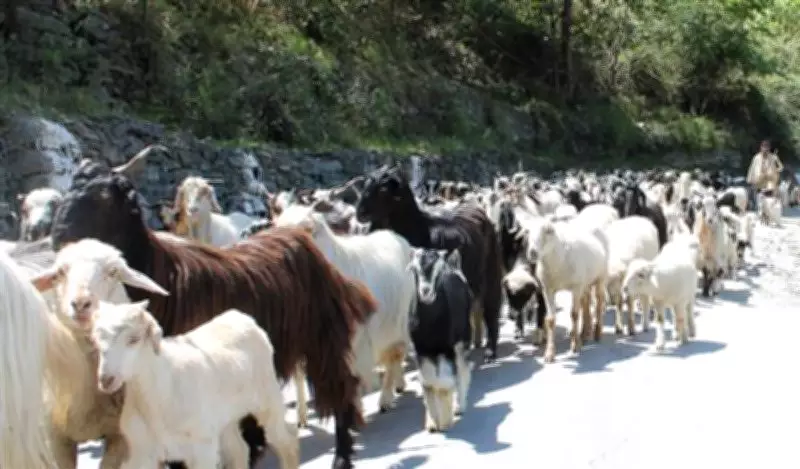
In a significant development for livestock traders, Jammu and Kashmir Minister for Food, Civil Supplies & Consumer Affairs, Satish Sharma, held a series of meetings with senior Punjab Government functionaries. The discussions resulted in immediate directions to address the long-pending concerns of the trading community, particularly mutton traders whose operations had been hampered by regulatory hurdles.
Meetings with Punjab Officials
Sharma engaged in detailed talks with Punjab’s Animal Husbandry Minister, Chief Secretary, Secretary of Science & Technology, and Secretary of Rural Development and Panchayati Raj. The meetings were centered on finding practical solutions to issues disrupting the smooth movement of livestock, which had caused significant hardships for traders.
Focus on Coordinated Action
During the deliberations, Sharma strongly projected the concerns of traders and emphasized the need for coordinated action between the governments of Jammu and Kashmir and Punjab. He stressed the importance of facilitating hassle-free transportation of livestock while ensuring compliance with regulatory norms. This dual focus aimed to balance trade efficiency with legal requirements.

Immediate Government Response
Responding positively to Sharma’s intervention, the Punjab Government issued on-the-spot directions to concerned departments to take immediate steps to resolve the issues. These decisions are expected to ease the difficulties faced by traders and improve inter-state coordination between Punjab and Jammu and Kashmir.
Minister’s Remarks
Expressing satisfaction over the outcome, Sharma said, "Protecting the interests of traders and ensuring the uninterrupted supply of essential commodities remains a priority of the government." His remarks underscored the administration's commitment to resolving trade bottlenecks.
Strengthening Animal Husbandry Cooperation
The meetings also focused on strengthening cooperation in the animal husbandry sector. Both sides discussed measures to improve livestock management, disease control, scientific breeding practices, and veterinary services through greater collaboration and the exchange of best practices. This broader agenda aims to enhance the overall health and productivity of livestock in the region.