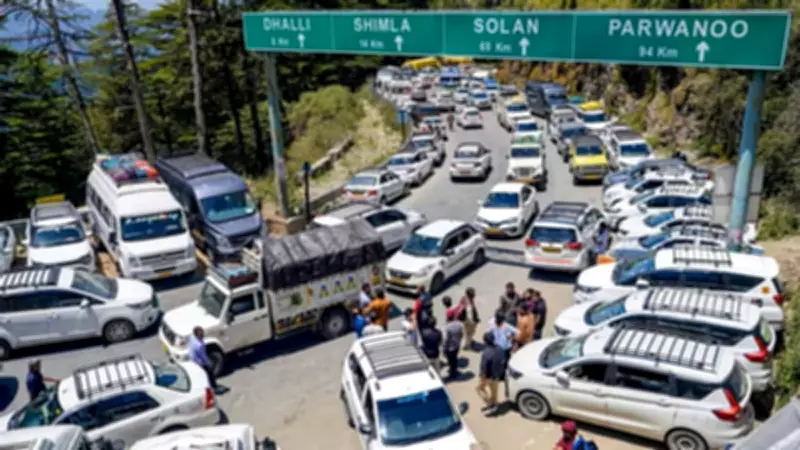
Shimla, the picturesque hill station in Himachal Pradesh, is grappling with an unprecedented surge in tourist vehicles. In just 45 days, approximately 1.5 lakh vehicles have entered the city, causing severe traffic congestion and prompting the local police to introduce a comprehensive five-point plan to manage the influx.
Massive Vehicle Influx Overwhelms Shimla
The summer season has brought a tidal wave of tourists to Shimla, with vehicle numbers skyrocketing. According to police records, around 1.5 lakh vehicles entered the city between May 1 and June 15, 2026. This has led to gridlocked roads, long waiting times, and frustration among both visitors and residents.
The surge is attributed to the lifting of pandemic restrictions and the allure of cool mountain air during the scorching summer months. However, the city's infrastructure is struggling to cope with the sheer volume of traffic.

Key Challenges Faced
- Parking Shortage: Existing parking facilities are insufficient to accommodate the number of vehicles, leading to haphazard parking on narrow streets.
- Road Capacity: The hilly terrain and narrow roads are not designed for such high traffic density, causing bottlenecks at major intersections.
- Environmental Impact: Increased vehicular emissions are deteriorating air quality in the otherwise pristine hill station.
Police Unveil 5-Point Plan to Ease Congestion
In response, the Shimla Police have rolled out a strategic five-point plan aimed at streamlining traffic and reducing chaos. The plan focuses on immediate enforcement and long-term measures.
1. Enhanced Traffic Enforcement
Police will deploy additional personnel at key junctions and popular tourist spots. Strict action will be taken against illegal parking and traffic violations. Automated challans will be issued using CCTV cameras to deter offenders.
2. Diversion and One-Way Systems
Traffic will be diverted through alternative routes to prevent congestion in the city center. One-way systems will be implemented on certain roads during peak hours to ensure smoother flow.
3. Boosting Public Transport
The plan encourages tourists to use public transport. Special shuttle buses will ply between parking lots and major attractions. The frequency of local buses will be increased, and app-based taxi services will be regulated to ensure availability.
4. Temporary Parking Lots
Additional temporary parking areas will be set up on the outskirts of the city. Tourists will be guided to these lots via signboards and mobile alerts. From there, shuttle services will ferry them to the Mall Road and other destinations.
5. Public Awareness Campaign
Police will launch an awareness campaign through social media, local radio, and digital displays to educate tourists about traffic rules, parking availability, and alternative routes. Real-time traffic updates will be shared to help visitors plan their trips.
Implementation and Expected Impact
The plan has been implemented with immediate effect. Senior police officials have been tasked with monitoring its progress daily. Early reports indicate a reduction in traffic snarls in some areas, but authorities acknowledge that sustained efforts are needed.
Shimla's Superintendent of Police stated, "We are committed to making the tourist experience pleasant while ensuring the city's infrastructure is not overwhelmed. Cooperation from visitors is crucial."
Long-Term Solutions on the Horizon
While the five-point plan addresses immediate concerns, the state government is exploring long-term solutions. These include expanding parking infrastructure, introducing a congestion tax during peak seasons, and promoting alternative destinations to distribute tourist footfall.
The massive vehicle influx also underscores the need for sustainable tourism practices. Environmentalists have called for stricter emission norms and incentives for electric vehicles in hill stations.

Conclusion
Shimla's battle with tourist gridlock is a wake-up call for popular hill stations across India. The police's five-point plan offers a template for managing seasonal surges, but lasting change requires investment in infrastructure and a shift toward sustainable tourism. For now, both authorities and tourists must work together to keep Shimla's charm intact without compromising on convenience.