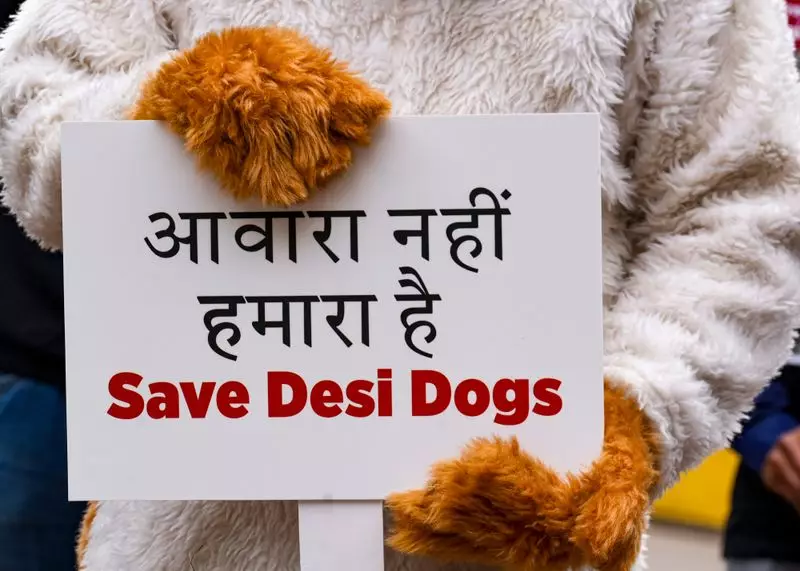
A significant protest by animal rights activists and welfare organizations took place at Jantar Mantar in New Delhi on Sunday. The demonstration was a direct response to a recent Supreme Court order that permits the removal of stray dogs from public parks, streets, and other communal areas.
Protesters Decry Supreme Court Directive
The gathering saw participation from various groups and concerned citizens who voiced strong opposition to the apex court's decision. The core argument from the protesters centered on the belief that the order could lead to inhumane treatment of community animals. They emphasized that the solution to human-stray dog conflicts lies not in removal but in the effective and widespread implementation of existing Animal Birth Control (ABC) rules and vaccination programs.
Activists at the site held placards and raised slogans advocating for coexistence and compassion. A key message was that stray dogs are a part of the urban ecosystem and deserve protection under the law. The protest aimed to send a clear message to the authorities, urging a reconsideration of the approach and a focus on scientific, humane management of stray dog populations.

Demands for Humane and Legal Compliance
The protesters outlined several critical demands during the event. Primarily, they called for strict adherence to the Animal Birth Control (Dogs) Rules, 2023, which mandate sterilization and vaccination as the official method for population management. They argued that removing dogs from their territories is not only cruel but also ineffective, as it disrupts social structures and can lead to new, unvaccinated dogs moving into vacated areas.
Furthermore, the activists highlighted the legal protections already afforded to stray dogs. They pointed out that Rule 7(7) of the ABC Rules specifically prohibits the relocation of dogs. The protest served as a call to action for municipal corporations and resident welfare associations (RWAs) to follow the law correctly—by supporting ABC programs and ensuring community dogs are vaccinated against rabies—rather than resorting to removal drives.
Broader Implications and the Path Forward
This protest underscores the ongoing and deeply emotional debate in Indian cities about managing stray animal populations. The Supreme Court's order has brought this issue to the forefront once again, pitting concerns about public safety and nuisance against animal welfare ethics and legal statutes.
The event at Jantar Mantar reflects a growing demand for a balanced, compassionate, and law-abiding policy. Activists stress that community engagement and education are vital for successful coexistence. The path forward, according to the protesting groups, requires robust government investment in ABC infrastructure, proactive vaccination campaigns, and public awareness initiatives to foster responsible behavior towards community animals.
The outcome of this controversy will likely influence how urban local bodies across India handle stray dog management, making the activists' stand at Jantar Mantar a pivotal moment in the ongoing discourse on animal rights in the country.