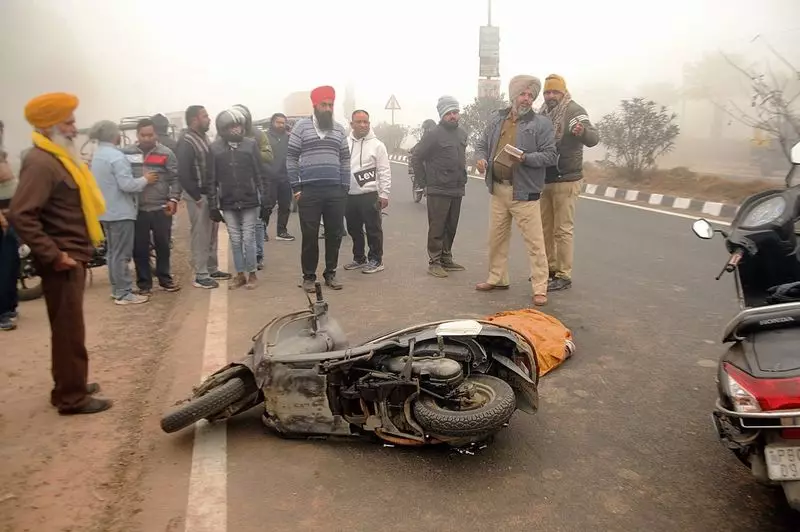
As dense winter fog continues to shroud the region, posing a severe threat to commuters, the city of Amritsar is actively seeking solutions to its alarming road safety crisis. A recent public discussion, an 'Open House' featured in The Tribune, has brought to light critical measures proposed by local residents, experts, and officials to drastically reduce accidents during low-visibility conditions.
Public Outcry and Expert Analysis on Fog Hazards
The dialogue highlighted a collective concern over the increasing number of collisions, pile-ups, and fatalities on highways and city roads around Amritsar when visibility drops. Participants stressed that while fog is a natural phenomenon, the resulting accidents are often a direct consequence of human error and inadequate preventive systems. The consensus pointed to a multi-pronged strategy needed to safeguard lives.
Former Deputy Mayor of Amritsar, Ram Singh, emphasized the non-negotiable need for drivers to strictly adhere to speed limits during fog. He argued that excessive speed, combined with poor visibility, is the primary culprit behind most severe crashes. This sentiment was echoed by numerous citizens who called for stricter enforcement of traffic rules on vulnerable stretches like the Amritsar-Delhi highway.

Key Recommendations from Amritsar's Citizens
The open forum yielded several concrete, actionable suggestions. A prominent recommendation was the mandatory use of vehicle fog lights and hazard lights when visibility deteriorates. Many argued that this simple step, often ignored, significantly enhances a vehicle's visibility to others on the road.
Another major focus was on infrastructure and public awareness. The proposed measures include:
- Intensive public awareness campaigns by the district administration and traffic police to educate drivers on safe fog-driving protocols.
- Installation of powerful, fog-penetrating street lights on highways and accident-prone zones to improve ambient visibility.
- Deployment of additional traffic police personnel at critical intersections and highway sections during early morning and late evening hours when fog is at its peak.
- Utilizing public address systems and social media alerts by authorities to issue real-time fog warnings and advisories to the public.
Enforcement and Technological Interventions
Beyond awareness, participants called for robust enforcement. Suggestions included penalizing drivers for speeding in foggy conditions, not using appropriate lights, and dangerous overtaking. There was a strong push for the use of speed cameras and patrolling on highways to deter reckless driving.
The role of technology was also discussed. Citizens urged the traffic police to leverage SMS broadcasts and geo-targeted mobile alerts to warn drivers entering low-visibility areas. Furthermore, improving road markings and reflective signboards to make them more visible in fog was deemed essential.
The collective message from Amritsar's 'Open House' is clear: preventing fog-related accidents requires a synergistic effort. It demands responsible driving from citizens, proactive governance from authorities, and the implementation of targeted safety infrastructure. As the winter persists, the adoption of these measures could be the difference between life and death for countless commuters on Punjab's roads.