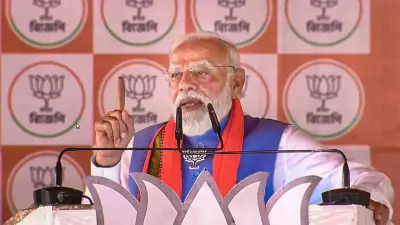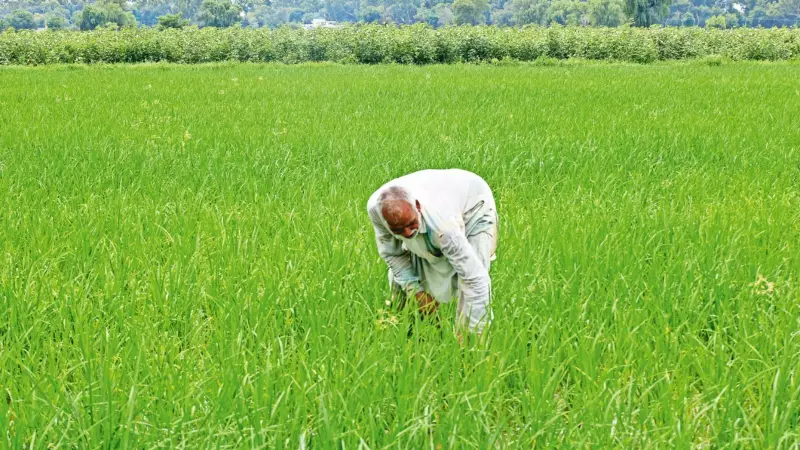
In the heart of drought-prone Maharashtra, a quiet revolution is unfolding that could hold the key to transforming India's agrarian economy. While the national goal of doubling farmers' incomes by 2022-23 saw limited success, a grassroots initiative in Beed district has achieved something far more spectacular: augmenting farmers' real incomes by more than ten times.
The Beed Blueprint: From Drought to Abundance
Around 2015-16, when Prime Minister Narendra Modi first envisioned doubling farmer incomes, the arid lands of Beed were grappling with severe drought. It was here that social activist Mayank Gandhi, under the Global Vikas Trust (GVT), launched the Krishikul project. The core idea was radical yet simple: convince farmers to abandon traditional, water-intensive crops like soyabean and cotton and switch to high-value fruit cultivation.
The shift included crops like papaya, custard apple, sweet lime, guava, pomegranate, mulberry, and bananas. The results, as validated by an independent 2024 evaluation by the Tata Institute of Social Sciences (TISS), have been nothing short of astounding. The average per-acre income skyrocketed from Rs 38,700 to a staggering Rs 3.93 lakh within a short transition period.

Four Pillars of the Krishikul Success
The model's success rests on a meticulously executed four-pillar strategy.
First, it began with building trust. Teams engaged deeply with farmers, understood their socio-economic challenges, and then introduced scientific, high-density plantation techniques for fruit crops.
Second, it tackled input costs. GVT leveraged bulk procurement to source the best quality saplings at Rs 30 each—half the market rate—and supplied them to farmers at a subsidised Rs 15. This critical subsidy was enabled by CSR funding, notably a Rs 25 crore grant from the Motilal Oswal Foundation, which also helped establish a 25-acre training and experimentation centre.
Third, and crucially, it solved the water crisis. The water table, which had plunged to 400 feet, was recharged using farm ponds, check dams, and innovative 200 Global River Aquashafts. These deep recharge shafts in riverbeds filtered and channeled surface water into aquifers, raising the groundwater level to about 50 feet in many areas, enabling assured irrigation.
Fourth, it de-risked finance. Banks were brought in to provide credit, with a first-loss default guarantee (FLDG) facility of Rs 1 crore covering the initial risk.
A Call for a National Horticulture Revolution
The scale of the project is significant. So far, GVT has planted over 6.7 crore fruit trees across 43,000 acres, benefiting roughly 30,000 farm families in 5,000 villages. This success story invites a compelling historical parallel: the scaling of the Kheda district milk cooperative into the nationwide White Revolution by Verghese Kurien and the NDDB, backed by Prime Minister Lal Bahadur Shastri's direct intervention.
Experts Ashok Gulati and Ishita Mandla from ICRIER now pose a pivotal question: Will Prime Minister Modi take a similar interest? They argue that while a charitable trust like GVT can demonstrate proof of concept, turning this into a nationwide movement requires state intervention with large resources, expertise, and policy support under a centre-state-NGO-business partnership.
The next frontier for Krishikul and any scaled-up model is capturing more value from the supply chain. Currently, farmers receive only 25-33% of the consumer's rupee. The target must be to secure at least 60% through aggregation, grading, cold chains, and processing. This would further amplify income gains.
The lesson from Beed is clear: transformative change is possible. It offers a tangible path for the government to move beyond the unfulfilled dream of merely doubling incomes and instead realise the goal of augmenting farmers' incomes manifold, truly making India's villages prosperous.