

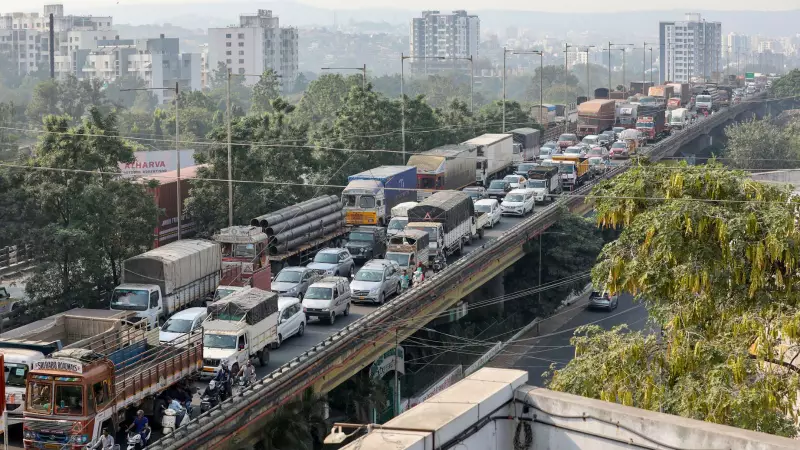
India's premier technology hub, Bengaluru, continues to be synonymous with grueling traffic gridlock, a problem that has stubbornly defied solutions for over two decades. Recent jibes from high-profile figures, including astronaut Shubhanshu Shukla and Biocon's Kiran Mazumdar-Shaw, have spotlighted the city's perpetual mobility crisis.
A City Paralyzed: From Garden City to Gridlock Capital
The transformation of Bengaluru from a serene 'Garden City' and pensioners' paradise in the mid-1990s to a traffic-choked metropolis is a tale of unplanned, explosive growth. The tech boom of the early 2000s triggered a massive influx of people and vehicles that the city's infrastructure was ill-equipped to handle.
According to the Karnataka government’s 2020 Comprehensive Mobility Plan (CMP), the city's population growth rate between 1991 and 2001 was a staggering 38%, making it India's fastest-growing metropolis after Delhi. This rapid expansion, coupled with a heightened focus on personal vehicles over public transport, has cemented Bengaluru's reputation for having some of the world's worst traffic.

The scale of congestion is staggering. Traffic police data reveals that nearly 60% of the city's traffic is concentrated on just 200 km of key road corridors. Morning peak hours (9-10 am) see congestion stretching over 100 km, while evening peaks (6-7 pm) choke a massive 210-230 km of road network. The TomTom Traffic Index 2024 ranked Bengaluru as having the third worst traffic globally, with commuters spending nearly 34 minutes to travel every 10 km.
Roots of the Crisis: Vehicles Outpace Infrastructure
The core of the problem lies in the explosive growth of private vehicles, far outpacing population increase and infrastructure development. Data from the Karnataka Transport Department is telling: between 2011 and August 2025, the city's population grew by nearly 50%, from 84 lakh to 1.23 crore. In the same period, registered private vehicles skyrocketed by over 200%, from 40 lakh to a colossal 1.21 crore.
This includes 82.83 lakh two-wheelers and 23.83 lakh cars. In stark contrast, public transport vehicles number a mere 13 lakh. Bengaluru now has the second-highest vehicle count in India after Delhi, highlighting a severe modal imbalance. A 2011 traffic plan bluntly stated that the high share of two-wheelers and growing car usage indicates an inadequate public transport system.
Bengaluru has the lowest share of public transport usage among major Indian cities. Even with the metro, only about 48% of the population uses public transport, compared to nearly 80% in cities like Mumbai and Kolkata. The city's rapid transit to resident ratio is a low 2 km per million population, compared to 10 km in Delhi and Chennai, and 9 km in Mumbai.
Patchwork Solutions and the Long Road Ahead
Attempts to fix the issue have often been band-aid solutions. The 9.99-km elevated flyover to Electronic City, built around 2010 at a cost of ₹750 crore, provided only temporary relief. Recent initiatives like the proposed twin tunnel road project (₹17,968 crore) and a request to route traffic through Wipro's private campus have been met with skepticism or refusal, highlighting the complexity of land acquisition and planning.
There are glimmers of hope. The opening of Namma Metro's Yellow Line to Electronic City in August 2025 reportedly reduced peak-hour congestion on the stretch by 38% in the morning and 37% in the evening, according to a traffic police survey. However, the metro network spans just 96.1 km currently, with ridership per km per day significantly lower than in Delhi, Mumbai, or global cities like Singapore.
Experts argue that the focus must shift from accommodating more cars to sustainable, long-term planning. The 2020 CMP and research from institutions like the Indian Institute of Science advocate for massive investments in expanding the metro rail network, suburban rail services, bus priority corridors, and non-motorized transport (NMT) infrastructure.

A key deterrent remains last-mile connectivity. A survey by the Bengaluru Political Action Committee (BPAC) found that car and two-wheeler users are willing to switch to the metro only if it reduces their door-to-door travel time, prioritizing seamless integration over cost.
The consensus is clear: solving Bengaluru's traffic woes requires a steadfast commitment to executing comprehensive, long-term mobility plans, not quick fixes. As the city grapples with constant road degradation, potholes, and chaotic digging, the path to a smoother commute depends on transforming the very blueprint of urban movement.





