

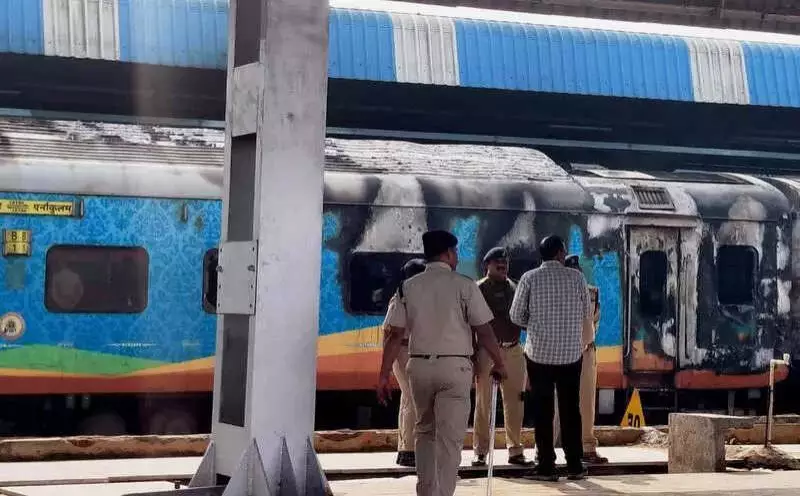
A tragic fire that gutted two coaches of the Tatanagar-Ernakulam Express on December 29 has been attributed to a technical fault known as brake binding, according to railway officials. The incident, which resulted in the death of a 70-year-old cloth merchant from Vijayawada, occurred near the Yelamanchili railway station in Andhra Pradesh's Anakapalle district.
What is Brake Binding and How Did It Cause the Fire?
Railway sources explained that brake binding is a dangerous malfunction where the brake blocks remain tightly applied to the wheels even after the loco pilot releases the brakes. This failure prevents the wheels from rotating freely, generating excessive heat and friction. The condition can lead to severe wheel damage, smoke, and in extreme cases, fires or even train detachment.
In this instance, staff at Yelamanchili station noticed the wheels of the affected coaches had become extremely hot, glowing like molten steel. Preliminary investigations ruled out an electrical short circuit as the cause, as the panel boards in the coaches were found intact and in good condition.

Fog and System Failure: A Deadly Combination
Officials suggested that the loco pilots might have failed to detect the early signs of brake binding due to poor visibility caused by dense fog. Normally, hot wheels emit smoke, produce a distinct grinding noise, or cause the train to run heavily, alerting the crew. However, these indicators may have been missed.
A potential technical system failure is also being examined as a contributing factor to the oversight. The fire is believed to have originated in the linen storage area of the air-conditioned coaches, where bedrolls, blankets, and pillows are kept for passengers. The blaze quickly engulfed the B1 and M2 coaches.
Swift Action and Ongoing Safety Investigation
Thanks to the quick thinking of one of the loco pilots, who stopped the train at Yelamanchili station, 157 passengers managed to escape the burning coaches. The prompt evacuation prevented a higher casualty count.
In the aftermath, Safety Commissioner Madhavi of the South Central Railway Zone (SCR) launched a detailed inquiry. Officials from Narsingaballi and Yelamanchili stations who were on duty during the mishap were summoned for questioning. Madhavi also recorded written statements from officers of various ranks at these stations.
The investigation is now leveraging CCTV footage from the B1 coach to meticulously verify and examine the precise spread and origin of the fire. This forensic approach aims to pinpoint the exact sequence of events and identify any lapses in protocol or maintenance.






