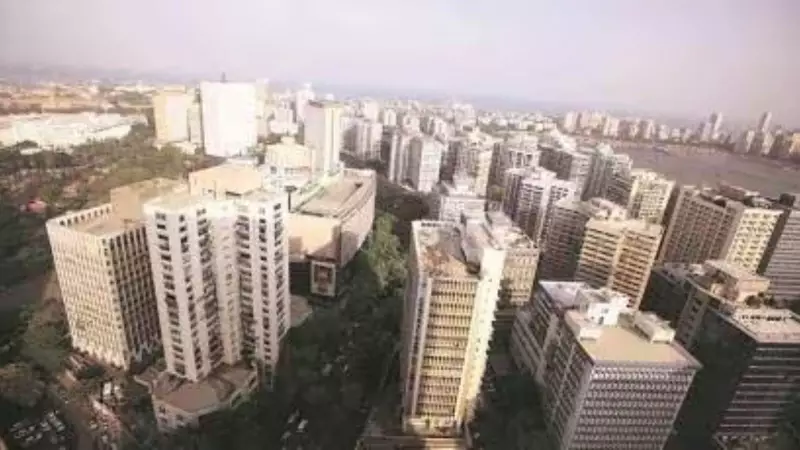
In a significant move aimed at providing relief to residents, industrialists, and traders, the Chandigarh Administration has taken a crucial step towards resolving thousands of long-pending building violation cases. The administration has sent a formal proposal to the Union Ministry of Home Affairs (MHA) seeking an amendment to the Capital of Punjab (Development and Regulation) Act.
Mounting Penalties and Pending Cases
The primary objective of this amendment is to rationalise the penalties imposed in building violation cases. Currently, more than 5,000 notices related to such violations are pending across the Union Territory. A large majority of these involve industrial units and commercial properties. The existing penalty structure, which has remained unchanged for years, has led to a situation where fines have accumulated to exorbitant amounts, sometimes even nearing the total value of the property itself.
Chandigarh's Chief Secretary, H Rajesh Prasad, highlighted the severity of the issue. He stated that a review of the cases revealed that outdated provisions in the Act have created serious complications. "In several instances, the penalty amount has risen to nearly the same value as the property itself, making it practically impossible for owners to pay," Prasad explained. He emphasised the need for a permanent legal solution to address these anomalies.

How the Current System Works
The Estate Office of Chandigarh routinely issues notices for unauthorised construction, which includes any structure built beyond the approved building plans. Under the current law, the penalty starts accumulating from the day a notice is served. The fine is calculated at a rate of Rs 10 or more per square foot per day, depending on the nature of the violation.
This mechanism of daily accumulation causes the penalty amount to escalate rapidly, often reaching several crores of rupees within a few months. This makes it financially unviable for property owners to settle their dues. Consequently, thousands of cases remain stuck in a legal limbo, leading to prolonged litigation. Officials note that even minor deviations from sanctioned plans can trigger this cycle of massive, unpayable fines.
Path Forward and Expected Impact
The demand for rationalising these penalties has been a long-standing plea from the city's business community. However, any change required a statutory amendment to the Act, which could not be addressed at the local level. With the proposal now forwarded to the central government, a resolution is finally in sight.
Once the amendment is approved by Parliament, the UT Administration will be empowered to revise and rationalise penalties at its own level. This will pave the way for the settlement of the existing backlog of over 5,000 cases and provide a fairer framework for addressing future violations. The move is expected to significantly reduce the burden on SDM courts and other legal forums where these cases are pending.
The areas worst affected by the current regime are the industrial zones and commercial complexes across Chandigarh. In many instances, violators have already removed the unauthorised structures, but the penalty issue continues to haunt them, blocking resolution. The proposed amendment seeks to bring a pragmatic end to this protracted problem, offering much-needed relief to the city's property owners and business ecosystem.