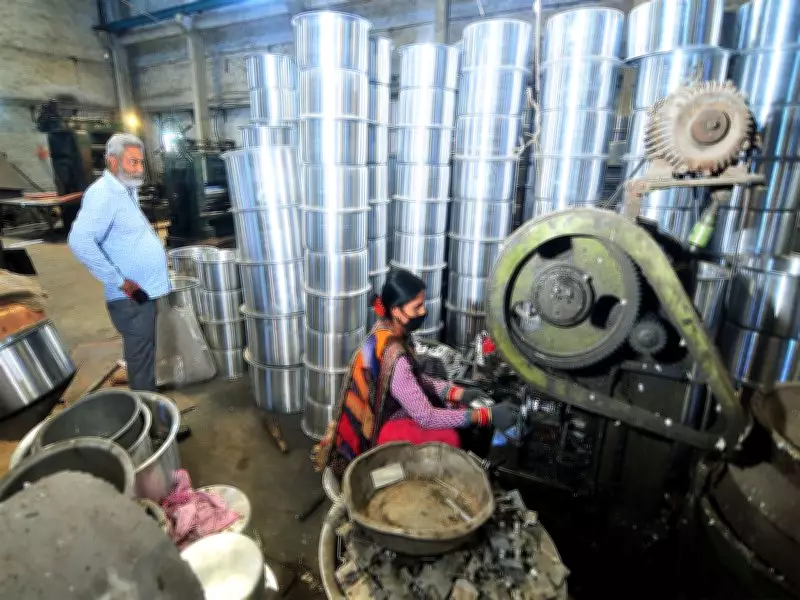
Women Severely Underrepresented in Delhi's Non-Corporate Sector
Delhi's neighbourhood shops, traders, workshops and service providers may be among the country's most productive urban businesses, but the people running them remain overwhelmingly male, according to the National Statistics Office's (NSO) first city-level assessment of India's non-corporate urban economy. The report found that women account for just 13.5 per cent of the workforce in Delhi's small businesses that are not registered as companies. In simple terms, nearly nine out of every 10 people working in the sector are men.
Women also remain a minority among business owners. Only 16.2 per cent of Delhi's proprietary businesses are owned by women, meaning more than four out of every five such businesses are owned by men, the survey showed.
ASUSE 2025 Report: Scope and Methodology
The findings are part of the 'Urban Unincorporated Enterprise Landscape: ASUSE 2025 – Insights from Million-Plus Cities' report, which analysed neighbourhood shops, traders, repair units, manufacturers and service providers operating as proprietorships or partnerships across 46 Indian cities with populations of more than 10 lakh. Registered companies, government establishments and factories covered under the Annual Survey of Industries were excluded from the scope of the study.

The report estimated that Delhi alone had 5.92 lakh such establishments, employing nearly 13.94 lakh workers. Across the wider National Capital Territory, the numbers rose to 10.34 lakh establishments, employing 22.31 lakh workers.
Productivity and Employment Structure
Despite the low participation of women, Delhi ranked among the country's most productive urban centres. The Capital recorded a Gross Value Added (GVA) of Rs 66 lakh per worker, the third highest among the 46 cities surveyed, while the average value generated per establishment stood at Rs 6.20 lakh.
The study also found that 50.26 per cent of Delhi's workforce comprised hired employees, meaning every second person working in the city's small business sector was an employee rather than the owner or an unpaid family worker. This was among the highest shares recorded in the survey.
Sectoral Composition and Data Caveats
Services formed the backbone of Delhi's small business economy, accounting for 44 per cent of establishments, followed by trade (40 per cent) and manufacturing (16 per cent). The NSO noted that the estimates were based on sample surveys and should be interpreted alongside confidence intervals and relative standard errors.