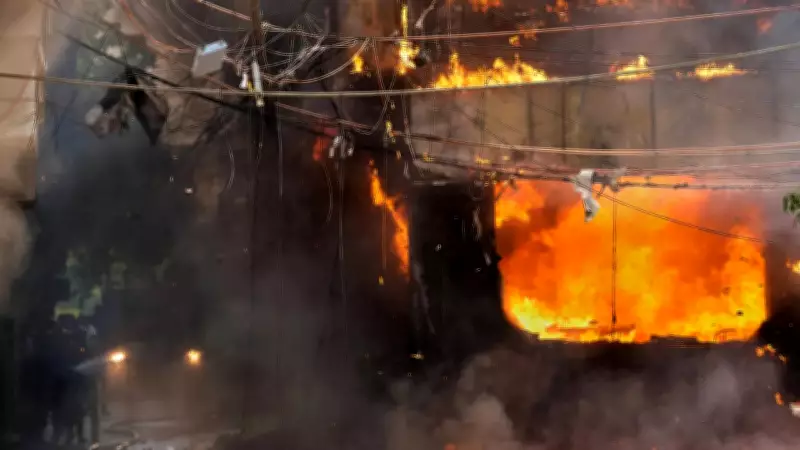
A devastating fire erupted at a hotel in Delhi's Malviya Nagar on Wednesday morning, claiming at least 21 lives and leaving several others injured. The restaurant reportedly had only a single entry-exit route, raising serious concerns about the lack of adherence to fire safety rules in India. Part 4 of the National Building Code of India lays down the basic framework for fire prevention and safety in buildings, with additional rules for high-rise structures and special occupancies.
Why the Code Matters
Safety in case of fire depends on multiple factors, including building design, materials used, planned compartmentation of the building space, and occupant behaviour during an emergency. Concealed spaces, ducts, shafts, and poor layout can allow smoke and fire to spread rapidly. Hence, these must be designed with safety in mind. For high-rise buildings, evacuation and fire-fighting become more difficult, so the Code adds stricter controls for stairs, alarms, risers, pressurisation, refuge areas, and drills.
Fire Prevention
Fire prevention begins with how a building is planned, classified, and constructed. The National Building Code classifies buildings into groups from A to J, such as residential (A), educational (B), institutional (C), etc. This classification is based on the nature and use of the building to meet dedicated safety requirements. For example, Category (C) stands for institutional buildings, which include hospitals. Here, people could be physically unable to escape by themselves. So, rules for hospitals require wider main exit doors (minimum 2.0 meters) to handle stretchers and support staff-aided evacuation.

The Code also addresses fire zoning, limitations on building height and area, and restrictions on using combustible materials in key parts of the building, such as corridors and lifts. Concealed spaces within ducts must be sealed with fire-resistant material as they can act as paths for flames and smoke.
Life Safety Provisions
The Code requires a continuous and unobstructed means of escape from any point in the building to a place of safety. Exits must be visible, indicated with a proper sign, and illuminated. It also specifies technical requirements for exit width, exit capacity, travel distance, number of staircases, door swing, corridor width, stair enclosure, handrails, and headroom. For example, staircases in higher-risk buildings must be enclosed, non-flammable, and protected against smoke. It also notes that lifts are not acceptable as a normal means of escape, so stairs and protected routes become the core of safety planning.
Active systems installed to detect and control the fire include manual and automatic alarms, fire extinguishers, hose reels, wet risers, down-comers, sprinklers, pumps, water tanks, and other fixed fire-fighting installations. The type and number depend on the building's category, height, covered area, and hazard level.
Rules for High-Rise Buildings
The National Building Code identifies any building equal to or above 15 meters as a high-rise. Annex E, under part 4, lists several practical requirements for tall buildings. A fire command station must be established, floor plans and building information must be available there, and occupants must receive personal fire instruction cards. Signs at lift landings, stairs, floor numbers, and re-entry points must be clear and durable.
Refuge areas are also required above a height of 24 meters, and after every 15 meters beyond that height. Fire lifts, pressurised stairs, emergency lighting, smoke control, and automatic fire detection all work together to reduce panic and support evacuation. The Code also expects regular housekeeping, maintenance of fire equipment, and periodic training so that the building remains safe in actual use.
The tragic loss of lives in the capital of this country serves as a testament to the general ignorance of fire safety rules. The rules are pointless if their implementation isn't strictly inspected.