

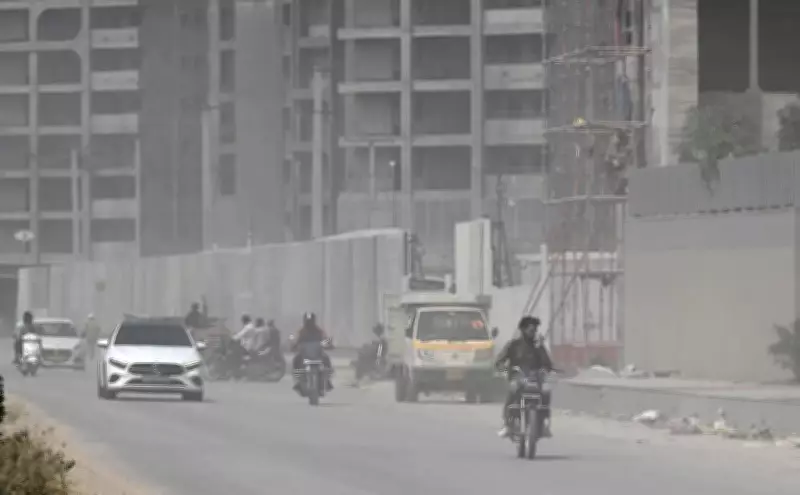
New Delhi: Civic agencies in Delhi have set a target to complete the redevelopment of nearly 70% of the city's identified damaged roads by October to curb dust pollution during winter. Work is underway on 2,361 km of roads out of the 3,379 km finalised under the citywide road redevelopment plan, which was prepared in line with the framework of the Commission for Air Quality Management (CAQM) after extensive ground surveys. The project is being monitored by the Prime Minister's Office, the Delhi chief minister's office, and CAQM committees.
Progress and Challenges
“About 70% of the targeted road redevelopment work (2,361 km out of 3,379 km) will be completed by October. So far, redevelopment work on 697 km has already been completed,” an official said. Paving footpaths, greening central verges, and filling potholes and cracks are all part of the drive. Officials noted that work on the remaining 1,018 km has been delayed due to disruptions in bitumen supply caused by the war in the Middle East.
“There was limited availability of bitumen and prices had risen sharply. However, the situation is now improving and we expect the remaining roads to be covered within the same time frame,” an official added. The Municipal Corporation of Delhi (MCD) has already completed end-to-end redevelopment on nearly 400 km of roads under its 1,200-km road improvement programme.

Impact of Bitumen Prices and Encroachments
Officials stated: “The recent surge in bitumen prices has had a limited impact on MCD’s project as most roads under its jurisdiction are less than 60 feet wide and are being reconstructed using cement concrete technology instead of bitumen-based surfacing. However, encroachments, particularly roadside vehicle parking, continue to pose challenges,” an MCD official said.
Residents' Concerns
Residents in several neighbourhoods, however, say they are waiting for work to begin. Neha Puri, of Green Park Extension, said, “Despite pursuing elected representatives and officials for the last three to four years, there is still no clarity on when work on the badly damaged roads in our area will begin.” Residents of Greater Kailash-II echoed similar concerns. “Internal roads turn into ponds during the monsoon and people often suffer injuries while wading through knee-deep water. Last year, rainwater entered homes. In many stretches, complete reconstruction is needed and patchwork alone will not solve the problem,” said Sanjay Rana of the GK-II RWA.
Technology for Quality Control
To ensure quality control and adherence to technical standards, MCD recently signed an agreement with the Central Road Research Institute (CRRI) for development of an Integrated Road Asset Management System (RAMS). “RAMS will serve as a comprehensive digital inventory of roads. It will enable continuous monitoring of structural strength, traffic load and service life, allowing authorities to prioritise repairs and prevent potholes before they develop,” an official said. MCD and CRRI have also signed a technology management agreement for patch repairs on roads less than 60 feet wide using steel slag-based materials.






