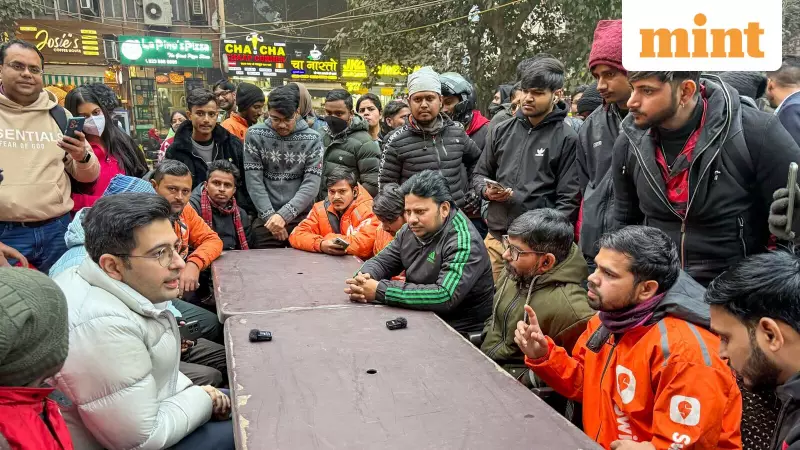
The recent strike by food delivery and cab aggregator workers on New Year's Eve has ignited a crucial debate in India: can the nation's vast gig workforce form traditional trade unions? While leaders like AAP's Raghav Chadha met striking workers in Delhi, platform founders argued the protest's impact was minimal. This clash highlights the complex position of gig workers within India's existing labour framework.
The Legal Hurdle for Gig Unions
In India, a registered trade union typically requires its members to be employees of a specific trade or company. This presents a fundamental challenge for gig workers, whose work is by nature temporary and flexible. A delivery partner can switch between Zomato, Swiggy, and a bike taxi app like Rapido at will, lacking a single, permanent employer. Consequently, many groups representing these workers are not registered under the Trade Union Act, 1926, and may instead register as societies.
This difference matters. Registration under the Trade Union Act offers members specific protections from civil and criminal suits. Without it, gig worker collectives, despite their growing voice, may not have the same legal legitimacy or privileges as traditional unions. India had over 37,000 registered trade unions as of 2022, but most gig worker groups are not part of this formal count.

A Turning Point: Proposed Social Security Rules
The landscape is poised for change. In late December, the government proposed draft rules under the Code on Social Security, 2020, which directly address gig work. These rules define a gig worker and set eligibility criteria for benefits: a worker must have engaged with one aggregator for at least 90 days, or multiple aggregators for 120 days, in a financial year.
More significantly, the draft proposes creating a social security fund and a National Social Security Board for Gig and Platform Workers. It also mandates the registration of eligible workers on a central portal. "These laws give better social security to gig workers," explains Ashwini Vittalachar, Partner at Samvad Partners. "The concept of a fund and welfare board is also expected to give recognition to these representative bodies." States like Rajasthan and Telangana have already passed similar welfare laws.
Historical Precedent and Future Growth
The mobilization of informal workers is not new. From the 1970s onwards, India saw successful unionization of headloaders (mathadis), construction workers, beedi rollers, and fishermen—all groups without permanent contracts or a single employer. The Building and Other Construction Workers Act of 1996 is a key example of formal recognition for such a workforce.
Today, the gig economy is massive and expanding. Niti Aayog estimates India has about 12.7 million gig workers, a number projected to soar to 23.5 million by 2029-30. Zomato's own disclosures show its fleet of monthly active delivery partners grew 10% year-on-year to 532,000 in the first half of this fiscal year. This sheer volume is amplifying calls for better representation and working conditions.
The New Year's Eve strike may have had limited immediate effect, but it underscores a systemic shift. As legal frameworks evolve to include gig work, the collective voice of these workers, channeled through their unions and federations, is gaining formal ground. The coming years will likely see a redefinition of collective bargaining in India's platform-driven economy.