

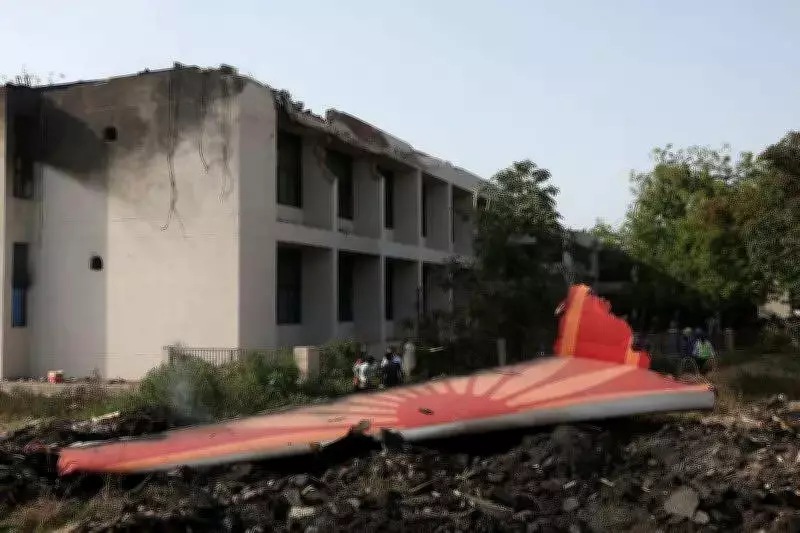
Mumbai: When Air India flight AI 171 crashed into the B J Medical College hostel in Ahmedabad on June 12, it killed 241 of the 242 people aboard and 19 more on the ground, among them four young medical students having lunch in their hostel mess. Though all the 260 people killed were victims of the same accident, under the Indian compensation laws, they were not quite the same kind of victims, say experts.
"Through the Carriage by Air Act and the Montreal Convention regime, passengers and their families benefit from a structured system of liability, insurance, and compensation. However, no comparable statutory framework presently exists for persons on the ground who become victims of aircraft accidents," said Safety Matters Foundation (SMF), an aviation safety non-profit, in a letter sent to the Ministry of Civil Aviation on Sunday.
"Unlike passengers, compensation for ground victims presently depends largely upon a combination of tort litigation, insurance claims, settlements and ex gratia payments," the letter said. The absence of a dedicated statutory mechanism creates uncertainty over liability, quantum of compensation, timelines for relief, claims procedures and access to justice.

It requested the govt to establish a statutory 'Ground Victims Compensation Framework', introduce strict liability provisions so that the victims only need to establish that the injury, death or property damage resulted from an aircraft accident, provide mandatory interim compensation within a prescribed period following the accident, prescribe minimum compensation standards, etc.
India's Aircraft (Investigation of Accidents and Incidents) Rules explicitly include people on the ground injured through contact with an aircraft within the definition of an accident. Along with passengers, ground victims are counted for the total tally of the injured or dead, but no legal document exists that recognises their right to compensation.
In the days immediately following the AI 171 accident, the Gujarat govt publicly acknowledged it had not yet decided on compensation for those killed or seriously injured (67) on the ground. Later, Air India released interim payments of Rs 25 lakh to ground victim families alongside passenger families. But the amount paid to ground victims' families was more like an ex gratia payment and not a legal entitlement.
Internationally too, the problem is unresolved. The 1952 Rome Convention established a system for compensating people on the ground who suffer damage from foreign aircraft, but it did not gain widespread acceptance. India signed the convention but did not ratify it. Following the 9/11 terror attacks, the UN's International Civil Aviation Organisation developed two updated third-party liability conventions adopted in Montreal in 2009. However, neither treaty has received enough ratifications to enter into force.
But some countries have legal frameworks in place, such as Switzerland's Aviation Act, which imposes unlimited strict liability on any aircraft operator for death, injury or property damage caused on the ground, or Belgium, which incorporated the Rome Convention into national law.






