

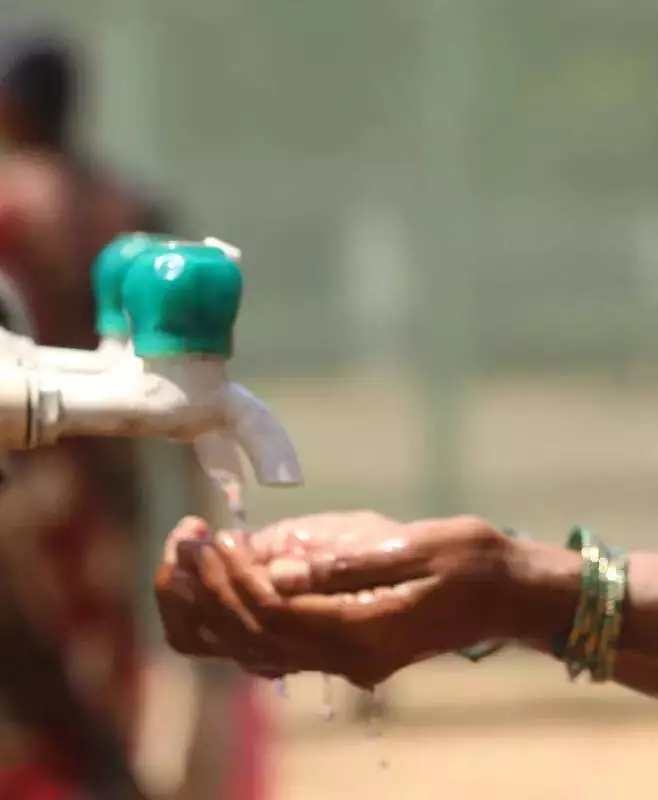
A recent government assessment has revealed that the ambitious Jal Jeevan Mission (JJM) still has significant ground to cover in Haryana, with several districts, including Mewat, struggling to provide potable water to all households. The flagship initiative, launched by the Union Jal Shakti Ministry to ensure 'Har Ghar Jal' (water in every home), has not yet achieved 100% coverage across the state, exposing critical gaps in supply and quality.
Key Findings from the Functionality Assessment Report
The "Functionality Assessment of Household Tap Connections" (FHTC) report provides a sobering look at the state's water infrastructure. The survey, which covered 9,282 households across 22 districts and visited 774 villages, found that a major share of Haryana's drinking water is sourced from groundwater. Specifically, 328 million cubic metres (MCM) came from underground sources, while 291 MCM was drawn from surface sources like rivers, canals, and streams.
The water is collected from a vast network of sources before treatment. The report noted that surface water was drawn from 2,486 locations, while groundwater was extracted from 4,815 sources. Despite this extensive infrastructure, the mission's coverage remains incomplete.

Disparities in District Coverage and Water Availability
The report highlights sharp and worrying disparities between different districts. The lowest coverage was recorded in the rural belts of Palwal district, where only 90% of households were covered. In six other districts, coverage ranged between 96% and 99%.
However, coverage does not always equate to reliable supply. The availability of potable drinking water showed a drastic shortfall in certain areas. In Mewat, only 33% of potable water was available, forcing a majority of households to seek alternatives. Rohtak fared only slightly better at 57% availability.
Overall, the water supply was found to be partial, inadequate, or grossly inadequate in around 12% of the surveyed districts. Hisar district emerged as the worst performer in this category, with a staggering 25.8% of its water supply deemed grossly inadequate. Furthermore, the report noted that 69.2% of households in Hisar did not receive the minimum requirement of 40 litres per capita per day.
Other Districts Facing Critical Shortages
The crisis is not confined to a few pockets. Other districts recording alarmingly low supply levels included:
- Bhiwani
- Dadri
- Mewat
- Rewari
In these districts, 24% to 28% of households received partially inadequate or inadequate drinking water, underscoring a widespread challenge.
The Road Ahead for Har Ghar Jal in Haryana
The findings of the FHTC report present a clear challenge for state authorities. While the Jal Jeevan Mission has made progress, the data indicates that achieving the goal of universal, safe, and adequate potable water supply requires intensified and targeted efforts. The significant reliance on groundwater, coupled with the uneven performance across districts, suggests a need for sustainable source management and infrastructure strengthening, particularly in the worst-affected regions like Mewat and Hisar. The mission's success in Haryana hinges on bridging these glaring gaps to truly deliver on the promise of water security for every rural and urban household.






