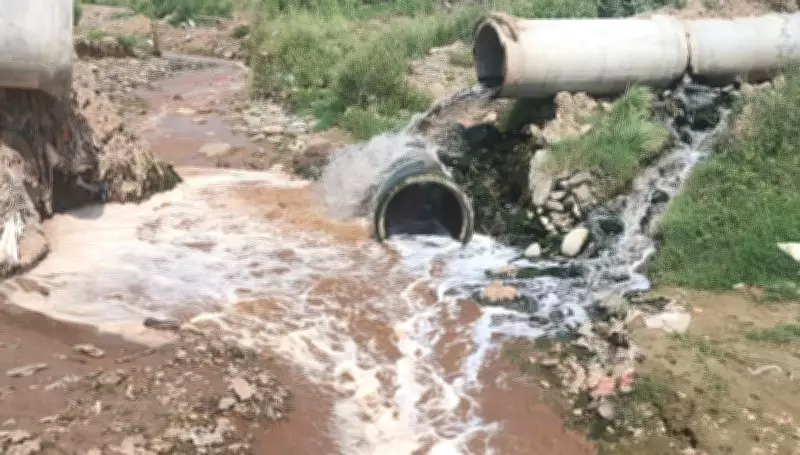
The Sarsa and Balad river stretches in Baddi, Himachal Pradesh, remain trapped in a cycle of severe pollution due to more than two decades of weak regulation and indifferent environmental conservation, according to assessments by the Central Pollution Control Board (CPCB). These rivers are among the 271 polluted river stretches identified across India, with conditions steadily worsening over time.
BOD Levels Reveal Critical Degradation
The CPCB's 2022-23 assessment shows that the Ratta river stretch before its confluence with the Sarsa in Baddi is categorized as "most critical" under Priority-I, with Biochemical Oxygen Demand (BOD) levels exceeding 30.1 mg per litre. In 2018, the same stretch was classified under Priority-III with BOD between 8 and 16 mg per litre, already far above the safe limit of 3 mg per litre. The Sarsa river stretch from Sitomajri Nallah to Baddi falls under Priority-II, with BOD ranging from 20.1 to 30 mg per litre.
Common Effluent Treatment Plant Fails Despite High Expenditure
Despite over Rs 100 crore spent in the past 11 years on the Common Effluent Treatment Plant (CETP) intended to centrally treat industrial waste, the facility has fallen short. Frequent leakages from the CETP release frothy industrial discharge into the Sarsa river, contaminating water and threatening aquatic ecosystems by obstructing oxygen transfer. The discharge also poses risks to cattle drinking from the river.

Laboratory analyses of samples from the CETP's final outlet have repeatedly shown violations, particularly in the bioassay test measuring fish survival in treated water over 72 hours. Failure of this parameter indicates that discharged water remains harmful to aquatic life, violating Sections 25 and 26 of the Water (Prevention and Control of Pollution) Act, 1974. The National Green Tribunal imposed an environmental compensation of Rs 1.08 crore on the plant.
Illegal Disposal and Infrastructure Failures
Several industrial units continue to use drains and nullahs for illegal disposal of toxic waste to avoid treatment costs. Near the gas plant on the Baddi-Barotiwala highway, green chemical waste is frequently dumped into a drain, allegedly by small printing units. Recently, an underground conduit carrying industrial waste burst near Sikka Hotel in Baddi, releasing untreated effluent onto roads and raising concerns about groundwater contamination. Illegal tanker disposal of untreated waste further compounds the crisis.
Cross-Border Pollution from Haryana
The pollution problem extends beyond Himachal Pradesh. At Sitomajri Nallah in neighbouring Haryana, heaps of industrial scrap washed by junk dealers allow chemical residues to enter waters that eventually merge with the Sarsa. Officials of the State Pollution Control Board in Baddi say the issue has been repeatedly raised with Haryana authorities but remains unresolved.
Regulatory Mechanisms Fail to Deliver Improvement
State governments are required to prepare action plans for improving river health, while River Rejuvenation Committees at the state level and a Central Monitoring Committee headed by the Secretary, Ministry of Jal Shakti, oversee progress. Despite these mechanisms, little improvement is visible in Baddi, where polluted drains, contaminated water bodies, and ecological decay have become commonplace. The CPCB monitoring began in 2009, assessing data from 2002 to 2008, and has continued since, but enforcement remains weak.
According to Ambika Sharma in The Tribune, "With regulatory enforcement remaining weak and monitoring mechanisms proving ineffective, Baddi’s rivers continue to pay the price of industrial growth, reflecting a collective failure of both industry and government to safeguard the environment."