Official claims versus ground reality
The Centre's assertion that all rural households in Haryana have access to potable drinking water under the Jal Jeevan Mission is increasingly facing scrutiny as protests over erratic and inadequate water supply continue to emerge from several villages across the state.
According to the Jal Jeevan Mission, implemented by the Department of Drinking Water and Sanitation under the Union Ministry of Jal Shakti, all rural households in Haryana’s nearly 6,600 villages have been provided Functional Household Tap Connections. The mission’s portal states that every rural household is entitled to safe drinking water of prescribed quality, at least 55 litres per capita per day, delivered at adequate pressure on a regular and long-term basis.
The claim was also reiterated in a Press Information Bureau release issued on October 26, 2025, which listed Haryana among the states and Union Territories that had achieved 100% rural tap water connectivity.

Protests spread across districts
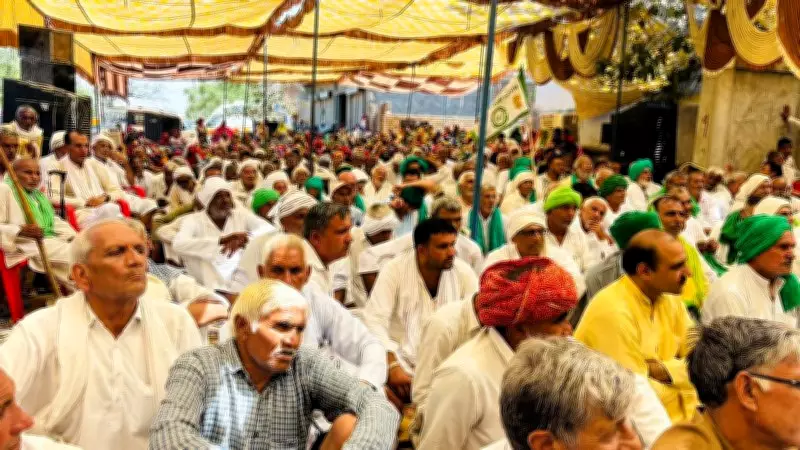
However, the situation on the ground appears far more complex. The ongoing agitation in Chanot village, where residents are demanding drinking water supply through the Bhakra pipeline, has brought renewed attention to the issue. Similar complaints have surfaced from Umarawat and Tigdana villages in Bhiwani district, Hansnagar and Prabhuwala villages in Hisar district, Makdoli in Rohtak district and several other villages.
Residents of Umarawat alleged that they have been facing an acute drinking water crisis for several months as regular water supply has remained disrupted despite repeated representations to public representatives and officials. Villagers Sandeep Kumar, Naveen Kumar, Kapil, Sahil and Manish alleged that the Centre’s Har Ghar Jal scheme has failed in their village. “Although tap connections have been provided to households, no water has been supplied through them,” they alleged. They added that “since water supply remains virtually non-functional, residents are forced to purchase water from private tankers, spending Rs 500 to Rs 600 per tanker.”
Sarpanch warns of agitation
In Tigdana village, Sarpanch Surender Kumar, after meeting Haryana Public Health Engineering Minister Ranbir Gangwa, said nearly 70% of the village population was facing an acute water shortage. He claimed that the village waterworks had remained in a dilapidated condition for almost a decade. “The villagers are deeply disturbed due to potable water shortage and could resort to agitation if the problem is not resolved at the earliest,” he said.
Technical issues cited
In Prabhuwala village of Hisar district, women staged a protest at the village waterworks over erratic and inadequate drinking water supply. A Junior Engineer attributed the problem to a shortage of canal water. Similarly, when Minister Ranbir Gangwa visited Hansnagar village, residents raised the issue of ensuring adequate drinking water supply.
Political reaction
Supporting the agitation at Chanot, Sirsa MP Kumari Selja said the authorities should verify the situation on the ground instead of relying solely on official records. “The authorities which made claims to provide tap water in every household also need to have a reality check from the ground which could help in resolution of the water problems in rural areas, which is a basic need of the citizens,” she said.
Official denial
Meanwhile, Hansi Executive Engineer of the Public Health Engineering Department Sanjiv Tyagi maintained that Chanot village was covered under the Jal Jeevan Mission and asserted that “even today there is no water supply shortage in the village.” He, however, acknowledged that “sometimes certain problems came up which led to disturbance of water supply.”