

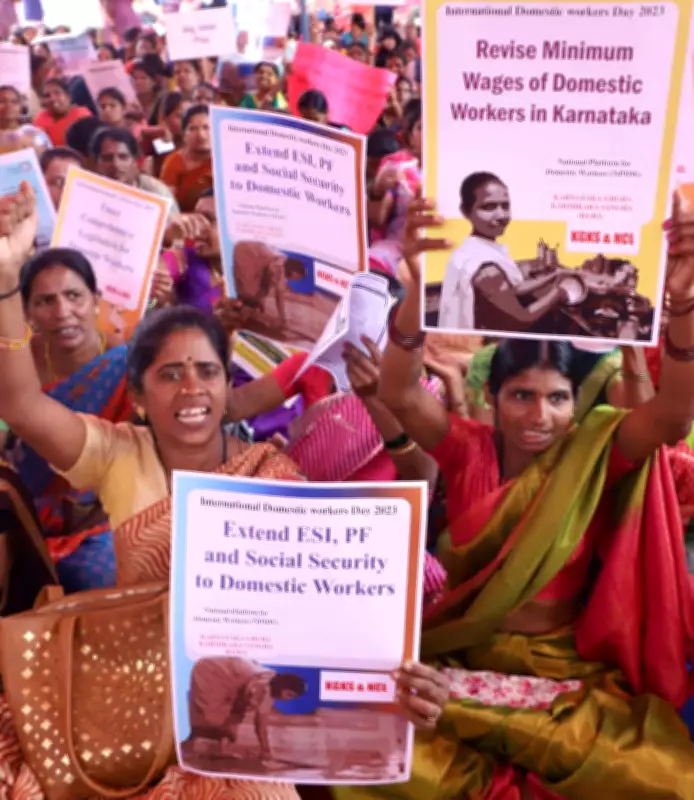
The revised Karnataka Domestic Workers (Social Security and Welfare) Bill, 2026, has removed criminal provisions that were part of the earlier draft legislation. The updated bill, which was placed before the cabinet on Thursday, no longer includes the earlier provision proposing a prison term of three to seven years and a fine of Rs 50,000 for offences involving trafficking of domestic workers for immoral purposes, abuse, or illegal confinement. Instead, it focuses primarily on penalties related to non-compliance with registration and labour provisions.
Discussion Deferred for Clarity
Law and Parliamentary Affairs Minister HK Patil stated, “The bill did come up for discussion, but a decision was deferred as more clarity was required on some provisions of the bill.” This indicates that the government is taking a cautious approach to ensure the legislation is comprehensive and effective.
Penalties for Non-Compliance
Under the new proposal, domestic worker service providers or placement agencies that fail to register could face a fine of Rs 5,000. An additional penalty of Rs 5,000 may also be imposed if agencies are found violating provisions of the legislation. The bill also states that individuals convicted under its provisions and subsequently found guilty again of non-compliance or contravention of the same provisions could face fines ranging from Rs 10,000 to Rs 20,000.

Wage Default and Minimum Wage Provisions
The bill stipulates: “In case of default of payment to the domestic worker the employer or service provider shall be liable to make payment along with interest on such payment as per rules prescribed and if payments are below minimum wages fixed for that employee then the person shall be punishable up to Rs 10,000.” However, these proposed penalty clauses would not apply in cases where complaints filed by domestic workers against employers or service providers are pursued under the provisions of the Code on Wages, 2019. The revised bill also states that domestic workers would be entitled to minimum wages and overtime payments while working for a single employer.
Expert Committee and Grievance Redressal
The legislation proposes the constitution of an expert committee to advise the government on matters arising from the administration of the Act. The committee is expected to comprise a minimum of seven and a maximum of 11 members. Additionally, the government has proposed setting up grievance redressal committees at the district level to address complaints and concerns raised by domestic workers.






